

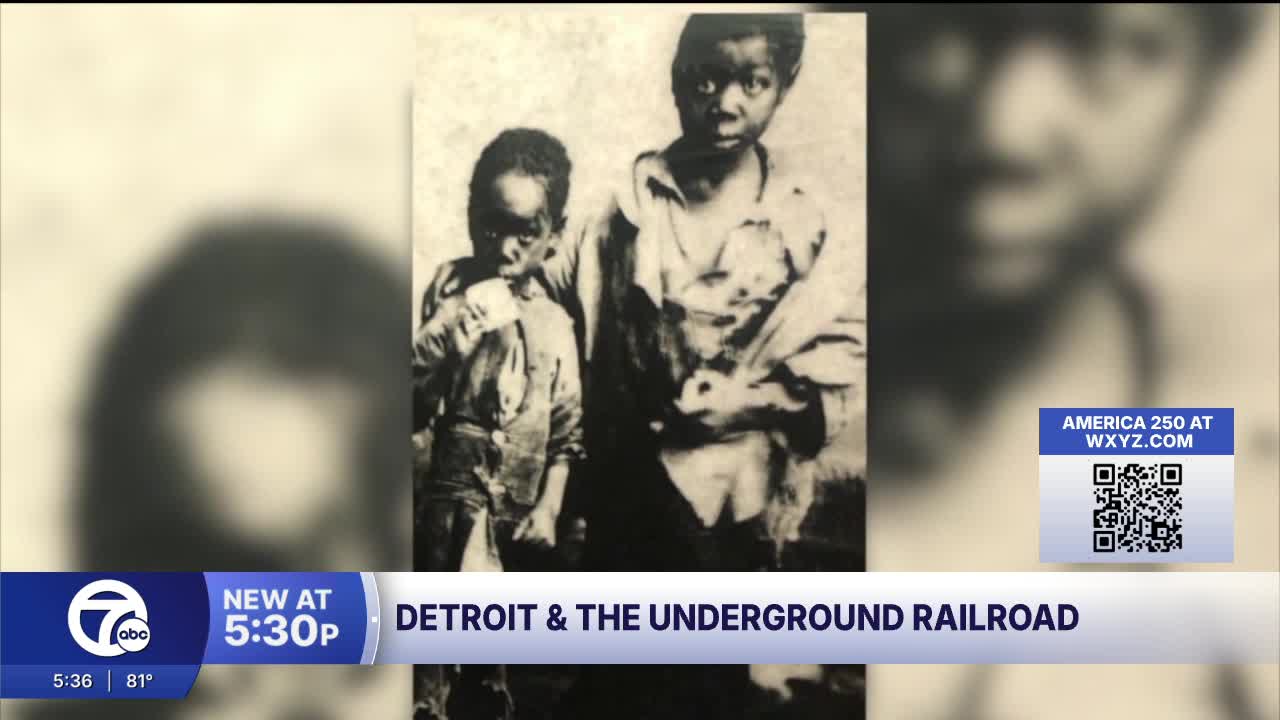


(WXYZ) — As America’s 250th birthday approaches, 7 News Detroit is taking a look at the ways the city of Detroit helped to shape the nation as we know it today.
Watch Whitney Burney's video report:
In August of 1619, the first enslaved Africans were brought here to the U.S. Over the next 246 years, more than 10 million slaves would help build the country and a robust economy.
As the nation inched closer to the Civil War, the abolitionist movement gained steam rapidly, with many enslaved people finding their way to freedom via the Underground Railroad and the freedom fighters willing to help them hide.
Several locations across the city of Detroit were final stops for thousands of fugitives seeking freedom in Canada.
"The amount of heart, the amount of conviction, just grit, whatever you want to call it, that people needed to have to make that journey north, to evade the dogs, evade slave catchers, to just hope and pray the house and people they ran into were supportive… it was tremendous," said Billy Wall-Winkle with the Detroit Historical Museum.

The museum features an exhibit dedicated to this specific history. Wall-Winkle says liberation was a generations-long effort in Detroit.
"You have a lot of different people working towards (Abolitionism), but one thing that is important to remember though is a lot of people were working for it, but even more people were ambivalent and even more people were actively working against abolitionism in Detroit," said Wall-Winkle. "One thing people don’t know about Detroit or really understand about the north in general is Detroit had slavery. There were people enslaved here for over 120 years during the European time period. There were indigenous slaves, there were African slaves and based on the records we have the last enslaved person left Detroit in 1832."
Shortly after, in 1837, Michigan officially entered the union as the 26th state. The new state constitution included a ban on slavery, according to the Detroit Historical Society.
Wall-Winkle says as strained relations between the U.S. and Canada at the time persisted, there were slaves from each nation fleeing across the borders.
"The Canadians, they adopted abolitionism very, very quickly. By the time we get to the 1830s, there isn’t slavery in Canada and by the time we get to the 1840s there’s actively government sanctioned work to stomp it out and to support folks coming to Canada," he added.
Wall-Winkle says the opening of the Erie Canal and rapid development happening in Detroit also made it a city that was more frequently traveled, meaning people seeking freedom didn't stick out as much. He says all of this made for a perfectly primed path to freedom.
While the landscape of Detroit has changed over the last 250 years, what's now considered downtown still houses evidence of the city's Underground Railroad history.
A historic marker sits near Larned and Beaubien streets, where Black community leader George DeBaptiste's home was. DeBaptiste hid fugitive slaves before helping them cross the border in his steamboat.

What's now State Capitol Park near Griswold and State streets was another stop along the Underground Railroad. A barn owned by businessman Seymour Finney was there. Enslaved people would hide among the livestock.

One of the oldest historically Black churches in the city, Second Baptist, was also once a stop along the Underground Railroad. The church's first few pastors were Underground Railroad conductors. To this day, the church has preserved that history in its basement.
"These scriptures on the wall testify against enslavement of people. Some people tried to weaponize the Bible as a tool against folks to promote slavery," said Pastor Lawrence Rodgers, who has led the church for the last 5 years.
According to church historians, an estimated 5,000 slaves passed through the church, sleeping in a small, brick room in the basement, on their way to Canada.
"We would take folks and hide them in the basement and we had a wagon like this here with a false bottom," said Rodgers as he pointed to a mural on the wall in the basement. "We would hide folks in the bottom of the wagon and then we would take them to the river."

"What does it mean for you as a Black man to be able to preserve this story and tell it to people of Detroit who may not know that it even exists," 7 News Detroit's Whitney Burney asked.
"I think it’s important. I think we’re living in an iconoclastic age where folks are trying to destroy stories of liberation, hope and freedom and I believe it’s because of efforts to try to kill the resilient spirit of a people," he said. "I believe that these stories matter because to preserve freedom for one is to preserve freedom for all."
Cheryl Garnett, who is the Vice President of the Fred Hart Williams Genealogical Society in Detroit, has been tracing her family history for decades. She says some of her family members passed through Detroit on the Underground Railroad en route to Canada.

"Michigan being a free state, a lot of people came here," said Garnett.
Garnett's third great grandmother and grandfather, Jane King Walls and John Freeman Walls, left Indiana in the 1850s and headed to Canada.
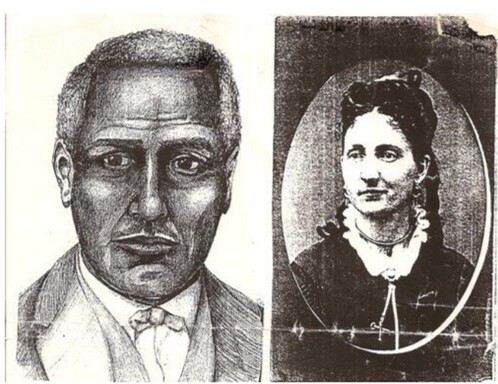
"Our family story was that he was emancipated and that together they took the Underground Railroad to get to freedom because she was an Irish woman and he was a Black man but she actually owned him in 1850."
Garnett says it's empowering to have such deep oral history of her ancestors. She says while some of her family returned to the U.S. in the early 1900s following the war, much of her family still calls places like Buxton and Puce in Canada home.

"When I cross into Canada and I get to their property. It’s this feeling of being home," she added.
"Even though I didn’t know them, I know them because I know their story."
