



Tens of thousands of people contract hantavirus each year, and around 10% of them die. There is no cure, but a growing body of research is focused on developing a vaccine — and the recent cruise ship outbreak has underscored just how urgent that work is.
RELATED STORY | French hantavirus patient critically ill, being treated with artificial lung
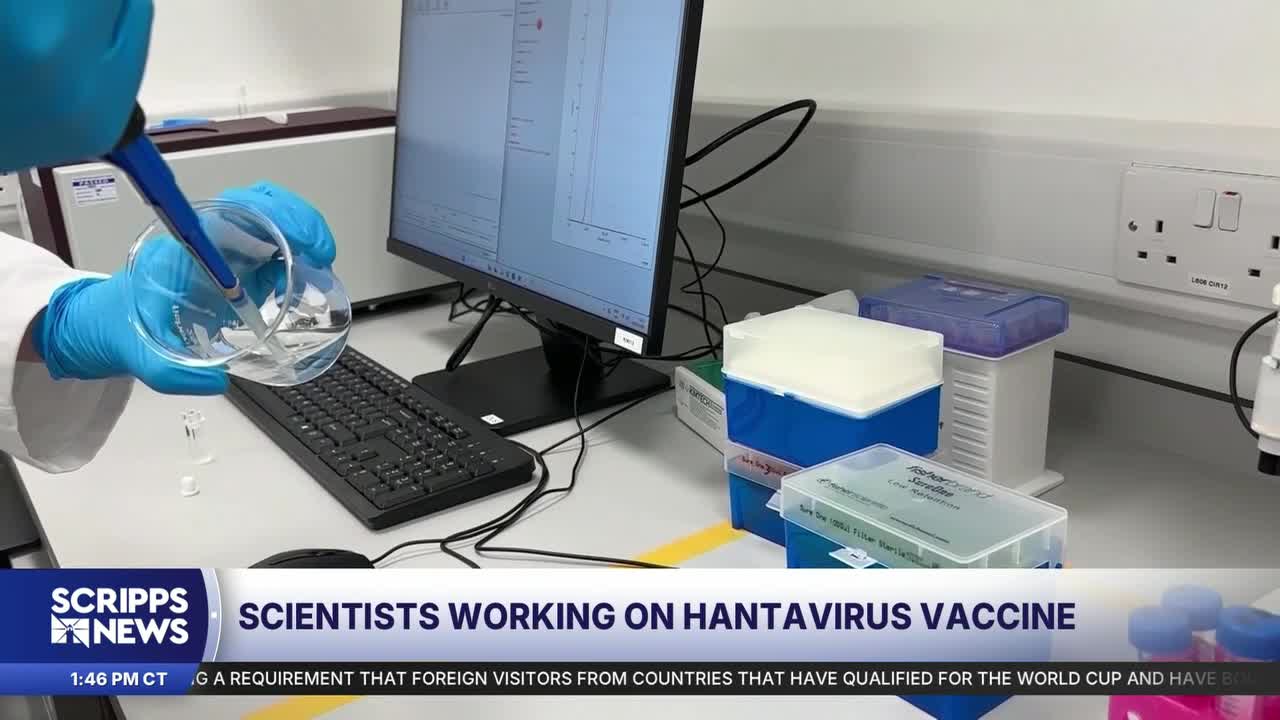
A team of researchers in southwest England is working with scientists in Texas and South Africa to develop a vaccine for one strain of hantavirus. Dr. Asel Sartbaeva, CEO of the biotech company EnsiliTech, said they are close to a breakthrouogh.
"We've done a lot of pre-clinical work, we've done laboratory work, we've done animal work," Sartbaeva said. "So we know the antigen, which we have developed, works really well in animal model. So we are really close to clinical work now."
Getting a hantavirus vaccine to people around the world, however, presents its own challenge. Many vaccines require refrigeration or freezing during transport and storage — a significant obstacle in regions without reliable power.
"We're looking at something like 1.5 million infants, so these are just children under five who are dying from vaccine-preventable diseases, in part because we cannot bring those vaccines to those children who need them," Sartbaeva said.
Researchers are working on a potential solution: a process that eliminates the need to freeze vaccines by encasing them in a protective layer of silica, the material sand is made from. They're also exploring the use of drones to deliver thermally stable vaccines to remote areas.
RELATED STORY | CDC leader rejects claims US is ‘less safe’ amid cruise ship hantavirus cases
Meanwhile, clinical trials are the next step in the long road to vaccination. The recent hantavirus outbreak has drawn global attention to this research, and scientists are now hoping to convert that interest into increased funding as work continues.
