



As inflation drives repair and medical costs up, many households are unknowingly underinsured. That means they have insurance, but limits are too low to cover a major claim.
These gaps in home and auto policies can lead to major out-of-pocket expenses.
"I had liability, because I couldn't afford full coverage," said Bernice Evans. In 2024, she said her vehicle was stolen and later totaled.
At the time, she only carried the minimum auto insurance requirement for her state and was left with no money for a new vehicle.
"My hard-earned money for that car," Evans said. "It's gone."
Drivers dangerously exposed
Rusty Reynolds, a personal injury attorney and founding partner of Reynolds & Reynolds Law Firm, warns that too many drivers are an accident away from financial collapse.
"So many people don't carry insurance and those that do carry insurance carry the minimum," Reynolds said. "That's the horror story -- we have wrongful death of a wage earner, a parent, a spouse, and that turns their life upside down."
RELATED STORY | Extreme weather is driving up homeowners' insurance across the US
Every state sets minimum limits that drivers must meet. But someone becomes "underinsured" when limits are not high enough to pay for all the damage.
"They're left with a huge debt that they'll never be able to pay in their lifetime or their child's lifetime," Reynolds said.
The Insurance Information Institute found that the number of underinsured drivers jumped from 10.6% in 2017 to 18% in 2023.
The research cites higher premiums and worsening affordability. It also warns of the potential increase of more uninsured drivers.
NerdWallet insurance expert Kaz Weida explains the more people go uninsured, the higher premiums will be for other drivers.
"Because there's a larger risk that you're going to get into an accident with someone who's uninsured and your insurance company might have to absorb some of those costs," Weida said.
Home insurance without enough coverage
In a survey by insurance company Kin, 18% of homeowners said they are underinsured, meaning their current policy doesn't provide enough coverage to fully replace or repair their home in the event of a loss.
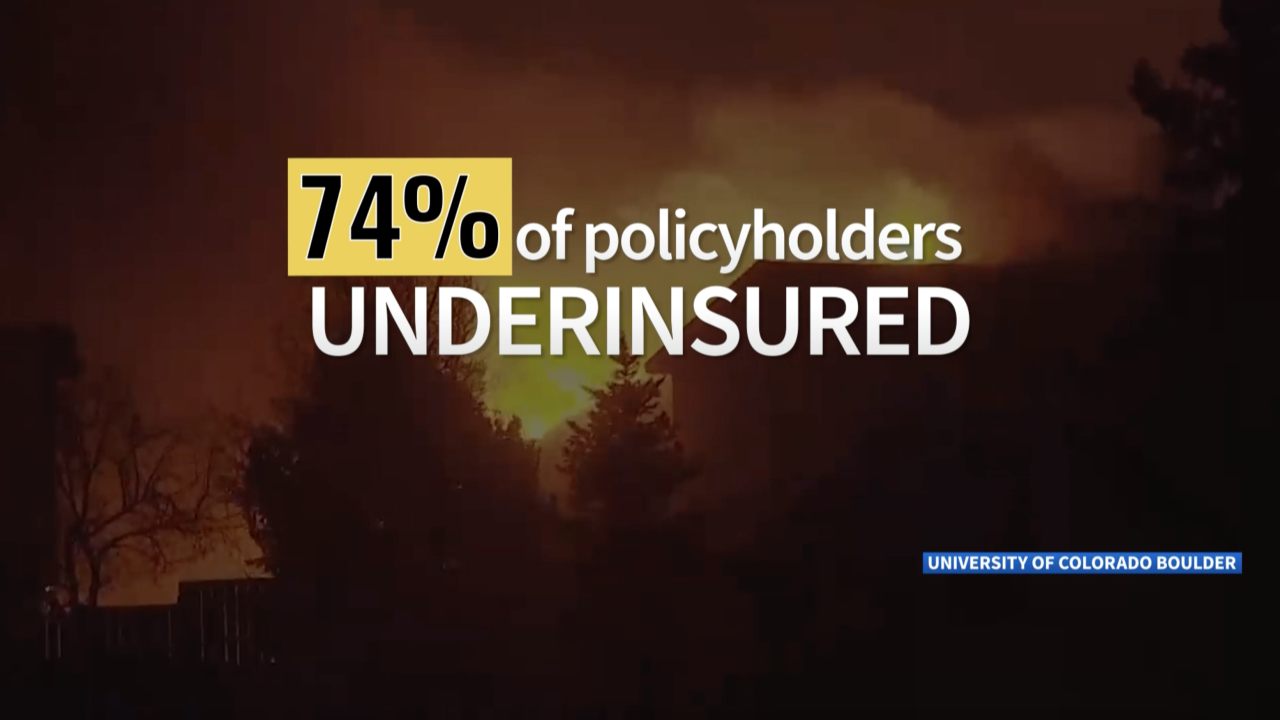
Following the devastating Marshall Fire in 2021, the University of Colorado Boulder examined insurance contracts from 24 insurers in the state, focusing on nearly 5,000 policyholders who filed claims after the fire.
Its research found that 74% of the policyholders were underinsured. Of those, 36% were classified as "severely underinsured," with coverage limits less than 75% of their home's actual replacement cost.
RELATED STORY | Tariffs could drive up car insurance costs as rates already climb nationwide
"If you're 25% short of being able to rebuild, that's severe," said finance professor and co-author Tony Cookson in a university report. "To put that in context, if it costs $1 million to rebuild, that's $250,000 people have to come up with. Most households don't have ready access to those types of resources."
Natural disasters cause ripple effects on insurance rates nationwide. When an insurance company has to pay out for natural disasters in one area, it can impact the rate of all policyholders.
When considering your home or auto policy, Reynolds encourages everyone to talk to an insurance agent to ensure they're properly covered.
"Just a little bit more can make a world of difference," Reynolds said.
Experts acknowledge that when people are on a tight budget, minimum requirements sound appealing, but a state minimum should be a last resort.
"Auto insurance that's just the bare minimum is about $629 a year for the average person paying for insurance. But what's hidden in that is a lot of risk," Weida said.
No matter the type of policy, experts encourage drivers and homeowners to compare policies based not only on premiums, but the actual cost per dollar of coverage.
