

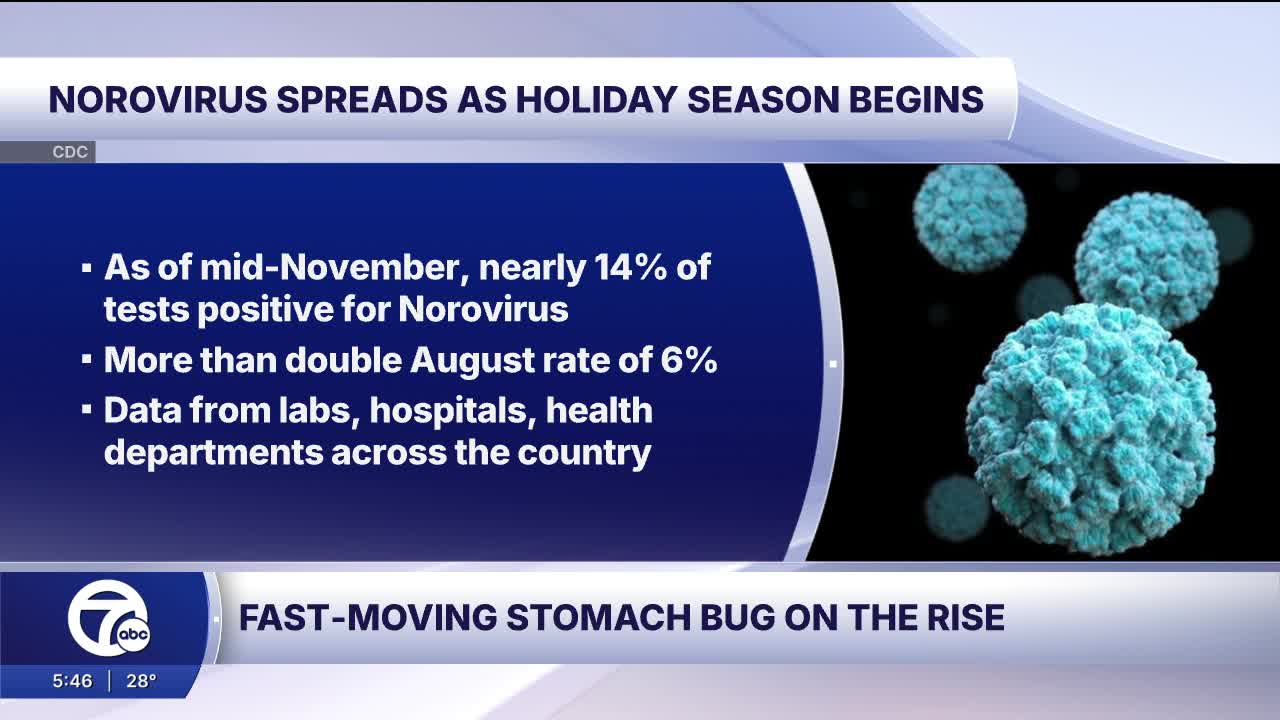


A fast-moving stomach bug is spreading as the holiday season gets underway, according to new data from the Centers for Disease Control and Prevention.
Norovirus can be a nasty bug — it inflames the stomach and intestines. It’s the leading cause of vomiting, diarrhea, and foodborne illness in the U.S.
As of mid-November, nearly 14% of tests were coming back positive for norovirus. That’s more than double what we saw three months ago, when positivity was about 6%.
This data comes from the CDC, which collects reports from labs, hospitals and health departments across the country.
But it’s not just the CDC seeing this trend. Data from WastewaterSCAN shows norovirus is rising across the US, especially in states like Louisiana, Indiana and Michigan.
Is this expected? Yes. Norovirus usually peaks between November and April, particularly as we move into the busy holiday season.
Norovirus is incredibly contagious. You can get it from direct contact with someone who’s sick, by eating or drinking contaminated food, or touching a contaminated surface and then touching your mouth.
And here’s something people don’t always know: Norovirus can still spread for two weeks or longer after a person feels better.
There are ways to protect yourself while you’re shopping, traveling and gathering for the holidays:
- Wash your hands frequently and thoroughly with soap and water – don’t use hand sanitizer by itself as it isn’t very effective against this virus.
- Clean and disinfect common surfaces, especially in kitchens and bathrooms.
- Wash produce and cook shellfish thoroughly.
If you do get sick, there is no specific medication for norovirus. So it’s important to drink plenty of liquids and watch older adults, young children, and anyone with a weakened immune system, as they’re at higher risk for dehydration.
Symptoms of dehydration can include less frequent urination, dry mouth or throat, and dizziness when standing. In children, look for tearless crying or being unusually sleepy or fussy.
Every year, the virus causes over 100,000 hospitalizations and around 900 deaths. Those most likely to die are people aged 65 and older. But usually, people will feel much better between one and three days.
This story was originally published by Dr. Partha Nandi with the Scripps News Group in Detroit.
