

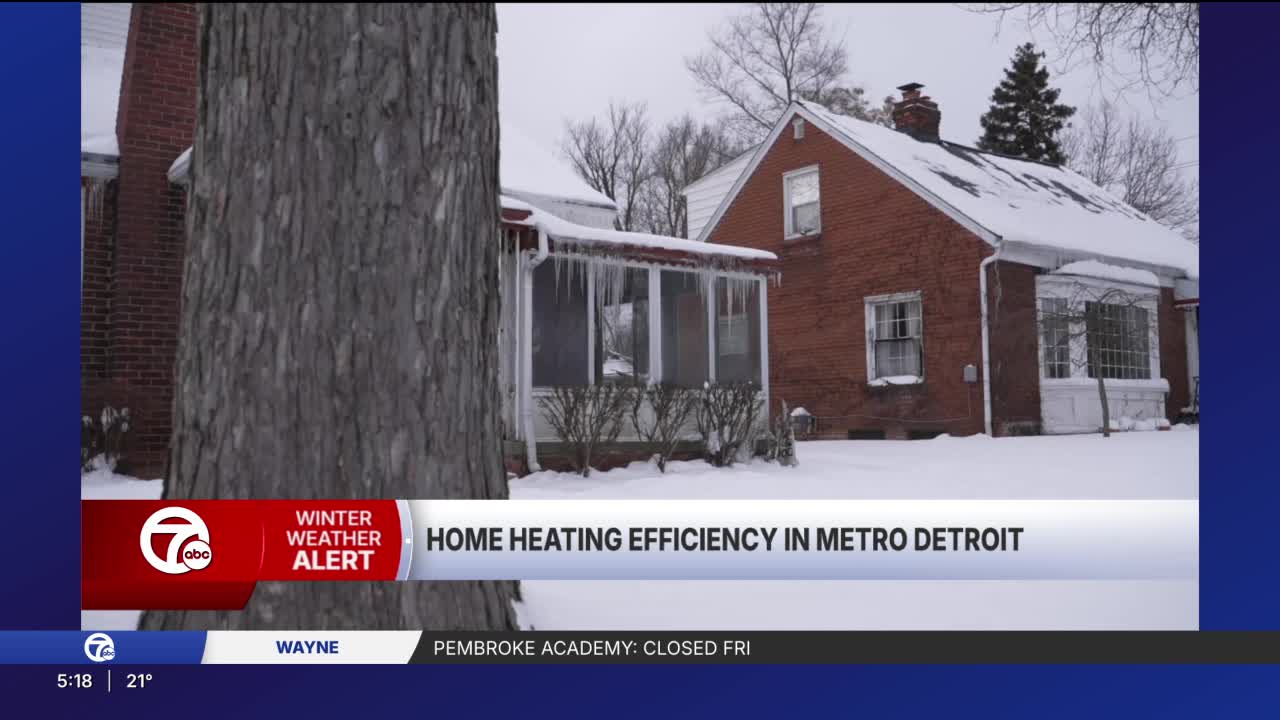

When winter temperatures plummet, heating costs can skyrocket. But HVAC professionals say there's an optimal temperature range that balances comfort with energy savings.
Watch Jeffrey Lindblom's video report:
Mike Fowler, an HVAC service technician with 20 years of experience, recommends keeping thermostats between 67 and 70 degrees during the winter months.
"Between 67 and 70 is an adequate temperature," Fowler said.

Homeowners have varying approaches to winter heating.
Alexander Thickstun keeps his thermostat at 67 degrees, while another homeowner, Nel, adjusts between 68 and 70 degrees depending on conditions.
"I think I'm a weirdo. I keep it at about 67 degrees," Thickstun said.

Fowler explains that HVAC systems work harder during winter, making proper maintenance crucial for efficiency. Most service calls during cold months involve dirty flame sensors and clogged filters.
"Dealing with dirty flame sensors, dirty filters... dirty filters being a big, big thing obviously," Fowler said.
Blocked airflow forces systems to work harder, increasing both runtime and costs. Fowler emphasizes that proper airflow allows systems to operate efficiently rather than getting clogged up.
"It increases run time, thus increasing run cost," Fowler said.
Beyond thermostat settings, homeowners can implement several money-saving strategies. Thickstun focuses on comprehensive winterization, ensuring his roof is in good condition and windows are properly sealed.
"There's a lot of little things when it comes to being a homeowner, but the number one thing is insulation," Thickstun said.
Fowler agrees that insulation plays a vital role in energy efficiency. He also suggests homeowners can save money by lowering their thermostat a few degrees from their preferred setting.
Nel, who ensured his home was well-insulated during construction to handle Michigan weather, employs simple tactics to retain heat and reduce bills.
"Open and shut doors quickly so you don't let a lot of heat out," Nel said.

For optimal performance, Fowler recommends annual furnace inspections and notes that well-maintained systems typically last 10 to 15 years.
"All of these things really play a role in affecting your (electric and gas) bill at the end of the day," Thickstun said.
This article was written by Jeffrey Lindblom for the Scripps News Group in Detroit.
———-
This story was reported on-air by a journalist and has been converted to this platform with the assistance of AI. Our editorial team verifies all reporting on all platforms for fairness and accuracy.
