

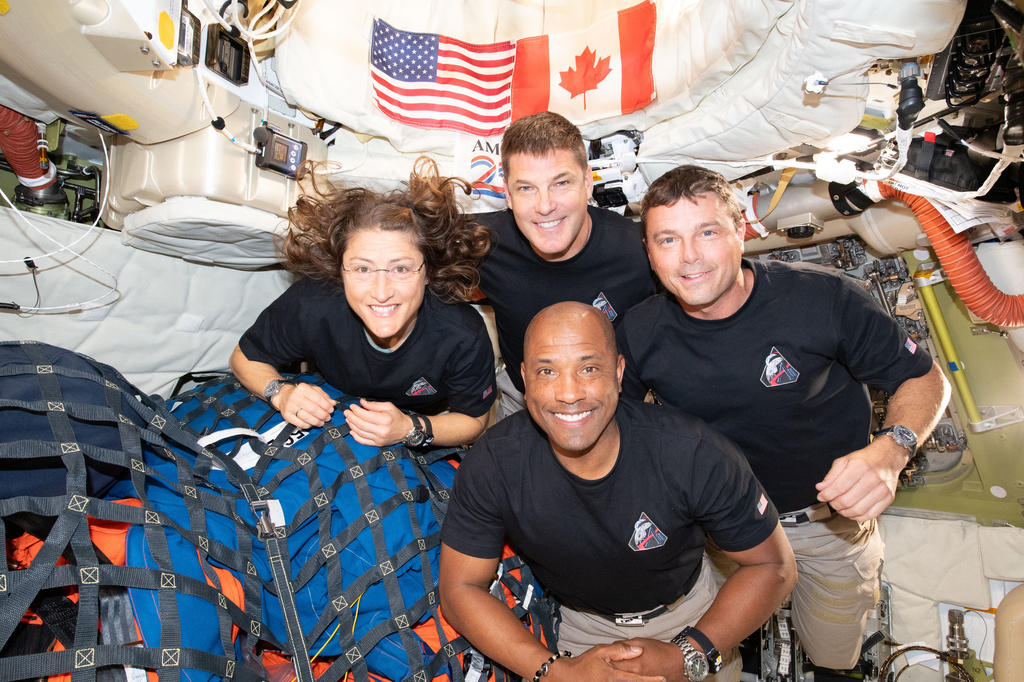

On Friday evening, the four Artemis II astronauts are set to return from the world's first crewed voyage to the Moon in more than half a century.
The historic 10-day mission sent the crew deeper into space any humans ever before, and throughout the mission, NASA has given us a glimpse of amazing images and observations, including never-before-seen views of the far side of the Moon.
"There's so much data that you've seen already, but all the good stuff is coming back with us. There's so many more pictures, so many more stories, and um. Gosh, I, I haven't even begun to process what we've been through," the astronauts said.
In metro Detroit and across the country, people will be watching Friday's splashdown. We spoke with Dr. Jim Bagian, a former astronaut, about the mission and slash down.
Bagian said the re-entry and splashdown is one of the riskiest parts of the flight. Artemis II has to re-enter the Earth's atmosphere.
“Anyone that’s a crew member, you always know that this is a serious undertaking. It’s not flying an airliner to go on vacation to Disney World. You know, if it was, nobody would be going to Disney World. That fact is, it’s far more hazardous than that. You know, I mean, you see the crew smiles and all. But, everybody knows it's very serious," Bagian said.
The Northville resident and current University of Michigan professor served aboard space shuttles Discovery and Columbia in 1989 and 1991, and has manned over 330 hours in space.
Grand Rapids native Christina Koch is one of the four crew members who broke Apollo 13's 56-year record. They traveled farther into space than any human ever has before. The mission was a dream come true for Christina.
“If I could have told that little girl who took home a picture of Earthrise and hung it in her room that she would eventually launch from that same place to see that same view, I'm pretty sure she would not believe it," she said.
Artemis II has captivated people all around the world with stunning images of their mission. The Orion space capsule the crew is in is scheduled for splashdown just off the California coast around 8:07 p.m. EDT Friday.
“At one of the first press conferences, we were asked, What are we looking forward to? And I said, splash down. And it's kind of humorous, but it's literal as well, that we have to get back," Victor Glover Jr., Artemis II's pilot, said.
Bagian said one of the riskiest parts of the mission. The Orion capsule will re-enter the Earth's atmosphere at more than 30 times the speed of sound, heating up the spacecraft's exterior to more than 5,000 degrees.
“They have to be at the right angle, how they're going to intercept the atmosphere. They want to come in, they don't want to come in too steeply because then they'll heat too quickly. If they come in too shallow, there's always thinking, like you've seen probably you've seen Apollo 13, could they skip out, right? And that's a real thing, it could happen," Bagian said.
NASA said they've slightly altered Orion's re-entry path, ensuring the crew's safety. After splashdown, recovery teams will pick up the four astronauts and fly them to a nearby Naval ship.
