

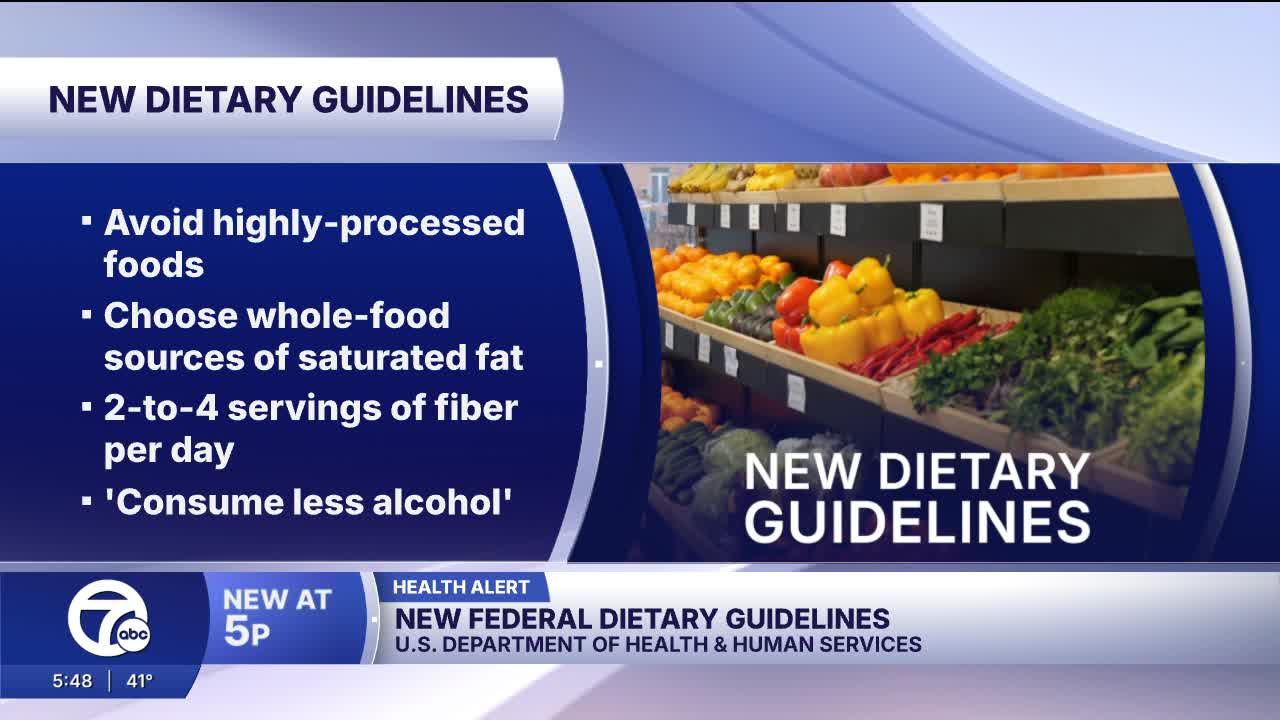


(WXYZ) — New dietary guidelines have been released by the federal government. Updated every five years, they emphasize more protein and whole foods while reducing added sugars and highly processed foods.
Officials released a new version of the food pyramid, flipping it upside down from the old version, with protein, dairy, healthy fats and fruits and vegetables at the top, and whole grains at the bottom.
So, how much more protein is recommended? Previously, adults were advised to get 0.8 grams of protein per kilogram of body weight. Today, the recommendation is 1.2 to 1.6 grams per kilogram. For a 150-pound person, that’s an increase from roughly 54 grams a day to between 82 and 109 grams. That’s a big jump.
The guidelines also call for limiting added sugars, saying that no amount is considered part of a healthy diet. They suggest keeping it very low, ideally no more than about two teaspoons per meal. That’s important, since the Centers for Disease Control and Prevention found that most Americans consume about 17 teaspoons a day.
When it comes to highly processed foods, the guidelines recommend avoiding “packaged, prepared, ready-to-eat, or other foods that are salty or sweet, like chips, cookies, and candy that have added sugars and sodium.” Instead, focus on nutrient-dense foods, cook more at home and choose healthier options when eating out.
Also, they suggest choosing whole-food sources of saturated fat - like avocados, whole-fat dairy or meat – while keeping saturated fat to no more than 10% of daily calories.
They recommend two to four servings of fiber per day. And for alcohol, limits have been removed. Now, the advice is simply to “consume less alcohol for better health.”
There are some concerns about the new recommendations. The guidelines say when adding fats to meals, prioritize oils with essential fatty acids like olive oil, which is healthy. But other options include butter or beef tallow, which previous guidelines advised to avoid.
Also, the American Heart Association says more research is needed on how much protein people should eat and which sources are healthiest. For now, they recommend focusing on plant-based proteins, seafood and lean meats, and limiting high-fat animal products like red meat, butter, lard and tallow. That’s because they’re linked to increased cardiovascular risk.
On the plus side, I like the “eat real food” message. I’ve always believed that food is medicine. When you eat foods that look close to how they came from the earth, a plant or the sea, you’re giving your body the nutrients it needs to work better. That can help lower the risk of chronic diseases like obesity, diabetes and heart disease.
