



(WXYZ) — Busy schedules can lead to less sleep, but a method called “sleep banking” might help you stay ahead of it.
Sleep banking means “saving” or “banking” sleep, so you can use it later. In the medical world, we call it “sleep extension.”
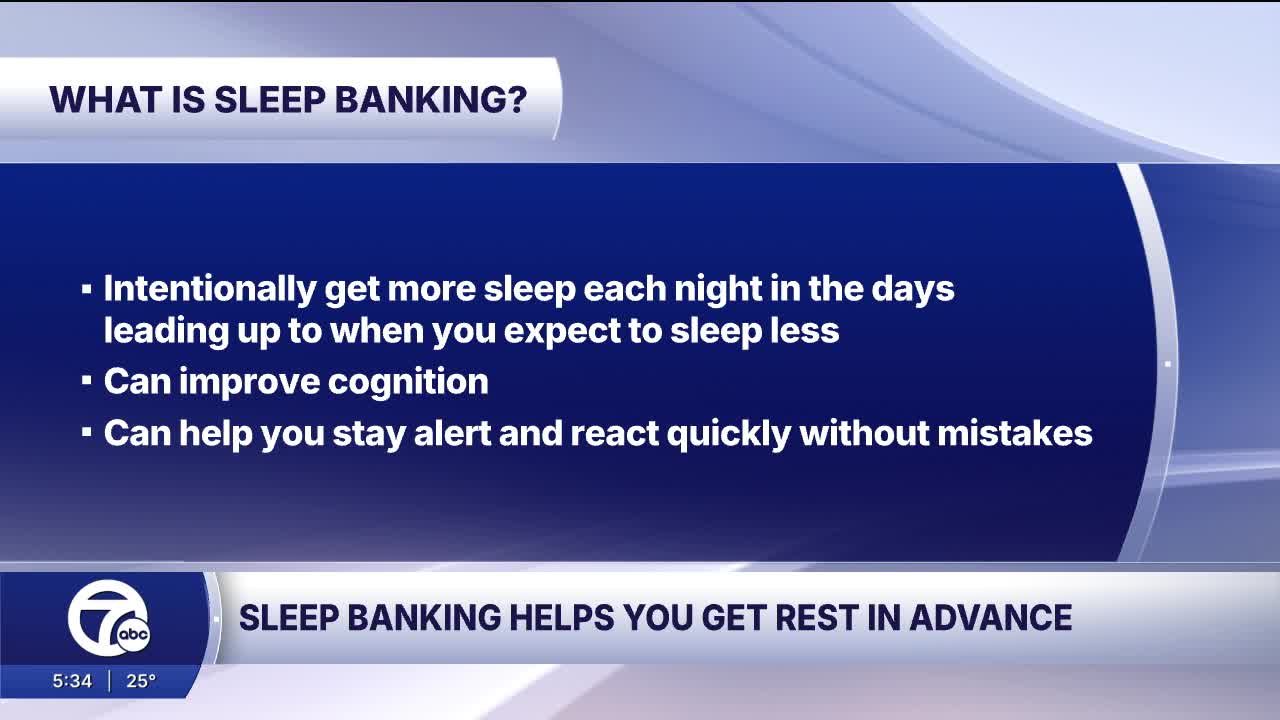
Here’s how it works: you intentionally get more sleep — even just 15 minutes more each night — in the days leading up to when you expect to sleep less. And that can really make a difference.
Studies show it can improve cognition and recognition related to vigilant attention.
Vigilant attention is your ability to stay alert and react quickly without mistakes, especially during long or boring tasks like driving or monitoring a screen.
Now, the people who benefit the most are those who have limited control over their schedules. That would include anyone working long shifts like doctors, nurses, firefighters and paramedics. Also, students cramming before big exams or professionals facing a project deadline can benefit from it occasionally.
There are limits. Sleep banking hasn’t been proven to help with more complicated thinking like executive functioning tasks. Executive functioning refers to the brain skills you use to plan, make decisions, multitask and handle complex daily activities. It’s different from basic alertness or reaction speed.
That said, sleep banking is much better than getting less sleep. A sleep debt can take a toll on you mentally and physically. Not only can it cause daytime sleepiness and impair mental function, but it can also affect mood, safety, performance and reduce immune function. It may increase the risk of health issues like diabetes, obesity and heart problems.
If you do try sleep banking, it’s best to avoid making it a long-term habit. For most healthy adults, the goal is still seven to nine hours of sleep every night and going to bed and waking up at the same time.
As for who shouldn’t try it, anyone who struggles with insomnia should avoid sleep banking. Going to bed early and lying awake for long periods doesn’t help and can make frustration worse.
So, use sleep banking occasionally if your schedule demands it, but then return to your normal routine as soon as you can. Great sleep hygiene is still the best strategy for your overall health.
