


(WXYZ) — In today’s Health Alert, heart disease remains the number one killer of women in the United States, yet many women still don’t see it as their biggest health threat. The warning signs can look different than men’s, and they can be easy to miss.
Heart disease is often thought of as a man’s disease. But the reality is, heart disease causes about one in five deaths among women in the U.S., and it affects women of all ages.
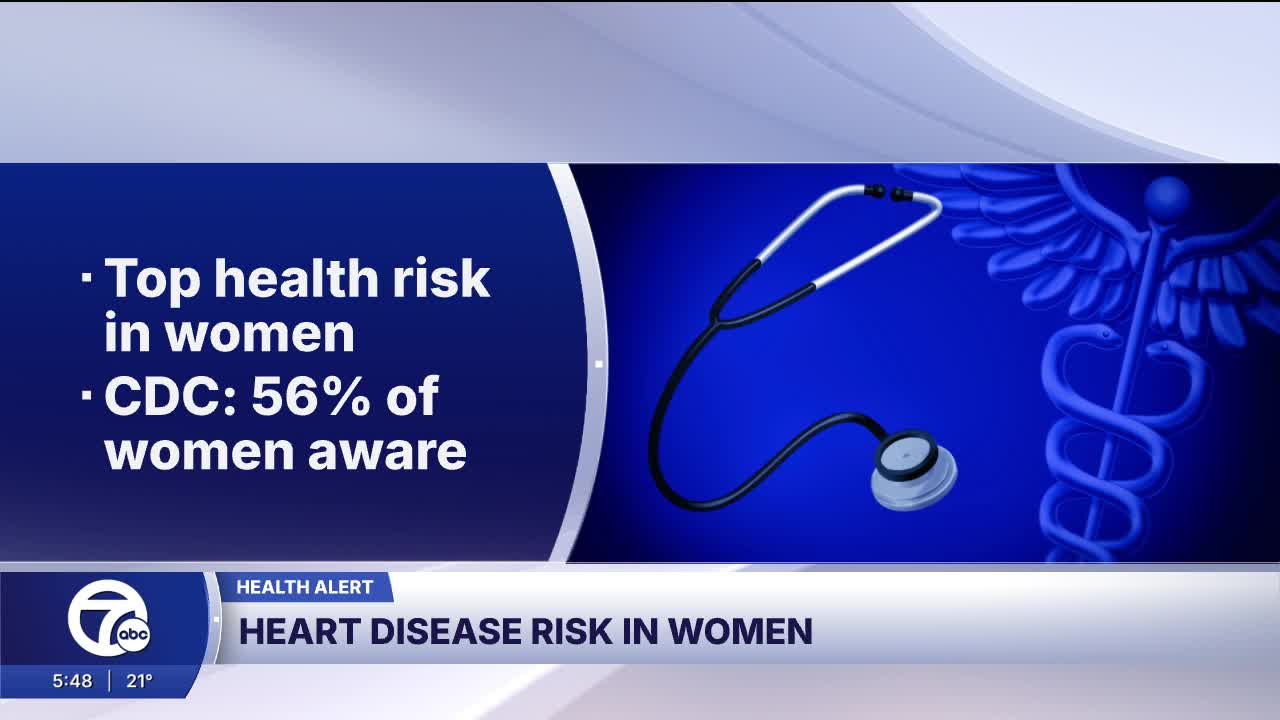
Now, one big reason it’s so dangerous is awareness. The CDC found that only about 56 percent of women realize heart disease is their top health risk. Many women worry about cancer, especially breast cancer, when, statistically, heart disease is far more likely to be deadly.
Another issue is how symptoms show up. For years, women’s symptoms were called “atypical,” but that’s misleading. Women are more than half the population, and their symptoms can look different. While men often describe crushing chest pain, women are 30% less likely to report it. Instead, it may feel like chest discomfort or pain in the neck, jaw, upper back, or arms. They may also have nausea, shortness of breath, dizziness, or fatigue that won’t go away.
Because of that, women often wait longer to seek help. And even then, unfortunately, it’s not uncommon to be told their symptoms have nothing to do with their heart.
The American Heart Association has something called Life’s Essential 8, which focuses on protecting heart health. What I like about “Life’s Essential 8’ is that they’re great for both women and men.
First is eating better. That means focusing on whole foods like fruits, vegetables, lean protein, nuts, seeds, and healthy oils.
Second is physical activity. Adults should aim for about two and a half hours of moderate exercise each week, or 75 minutes of more intense activity.
Third is quitting tobacco. Smoking is the leading cause of preventable death and greatly increases the risk of heart disease.
Next is sleep. Adults need seven to nine hours a night. Poor sleep affects blood pressure, blood sugar, and inflammation - all major heart risks.
Then it’s about managing weight, controlling cholesterol, and keeping blood sugar and blood pressure in check. High blood pressure is especially dangerous for women’s hearts and is often underdiagnosed.
So here’s my advice. Women need to be strong advocates for their health. Bring questions to your doctor and discuss symptoms, even if they feel vague. If heart disease is a concern, ask about testing and follow-up.
