



(WXYZ) — In today’s Health Alert, Lyme disease cases are climbing across Michigan, with 215 new cases reported in the last four weeks. As tick season reaches its peak, health officials are urging people to be extra careful when spending time outdoors.
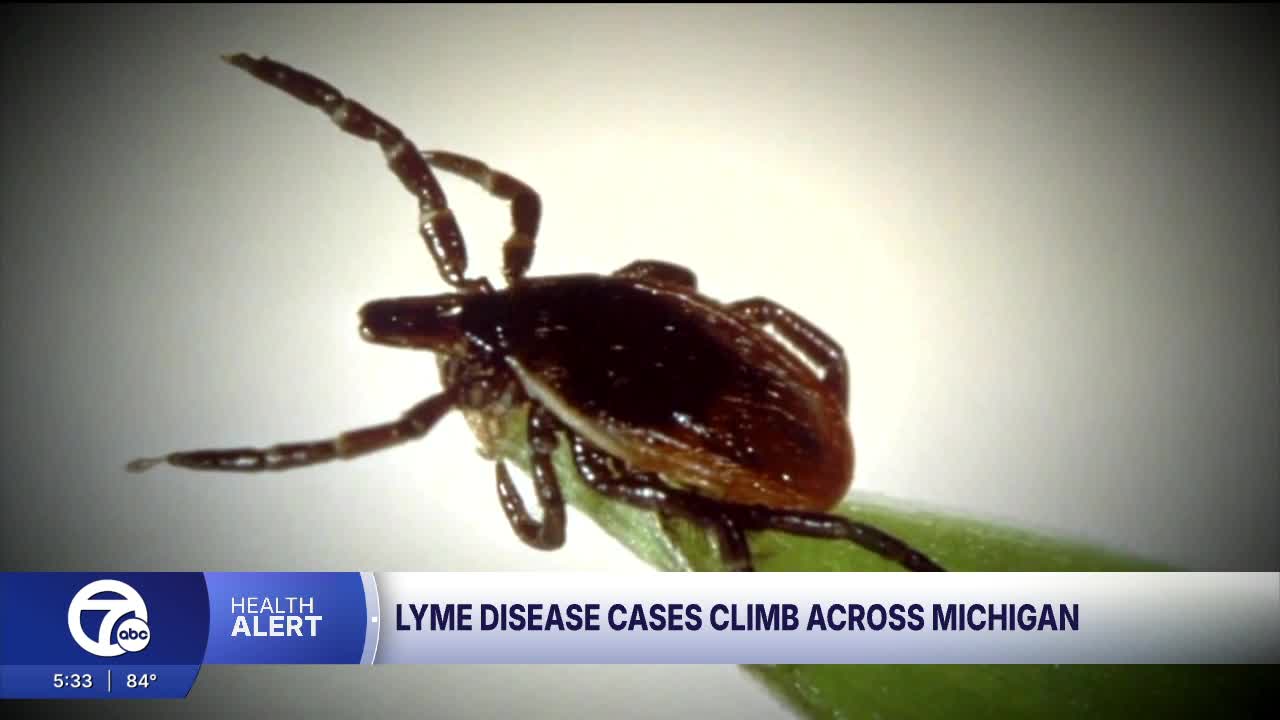
Ticks are most commonly found in grassy, brushy, and wooded areas. But they can also be in parks, along hiking trails, and even in your own backyard. In Michigan, blacklegged ticks, also known as deer ticks, are the main ticks that spread Lyme disease.
Now, tick bites are often painless. And, depending on their life stage, ticks can be as small as a sesame seed. They can look like a small dark spot or bump attached to your skin that wasn't there before. Ticks bury their heads into your skin, and if they’re large enough, you can see tiny legs move when they're touched.
As for signs of infection, these can develop anywhere from three to thirty days after a bite. Early symptoms may include fever, chills, headache, fatigue, muscle aches, joint pain, or swollen lymph nodes. The classic bull’s-eye rash may develop, but not everyone gets one. It may simply look like an expanding area of redness.
If Lyme disease isn’t treated, it can lead to more serious problems like facial paralysis, severe joint pain, heart issues, and nervous system complications.
For most people, you do not need to rush to the ER or your doctor’s office. What’s most important is to remove the tick right away. Use fine-tipped tweezers, grasp the tick as close to the skin as possible, and pull it straight up. Don’t twist it, crush it, or try home remedies like petroleum jelly or a hot match. After it’s out, clean the area with soap and water or rubbing alcohol.
Now, the reason you should not wait is that removing a tick within the first 24 hours can significantly reduce the risk of tick-borne illness. That said, if you develop any symptoms I mentioned earlier, you should contact your healthcare provider. And seek emergency care if you develop severe headaches, difficulty breathing, heart problems, or any signs of paralysis. The good news is that when Lyme disease is diagnosed early and treated with antibiotics, most people recover completely.
As for prevention, use an EPA-registered insect repellent, stay on cleared paths when hiking, and wear long sleeves and pants when you’re in wooded or grassy areas. Once home, check clothing, gear, and pets as well. Then, do a full-body check for ticks.
