



(WXYZ) — In today’s Health Alert, a Detroit-bound flight from Paris was diverted to Canada because a passenger from Congo boarded the plane during an Ebola outbreak in Central Africa. The flight then continued to Detroit, and many residents are concerned about exposure.
First of all, Air France said there was no medical emergency on board. The plane was diverted to Montreal after a Congolese passenger boarded in error. Due to the Ebola outbreak, the US has temporary entry restrictions in place as a precaution. People without US passports who have been in the Democratic Republic of Congo, Uganda, or South Sudan within the last three weeks are currently not allowed entry.
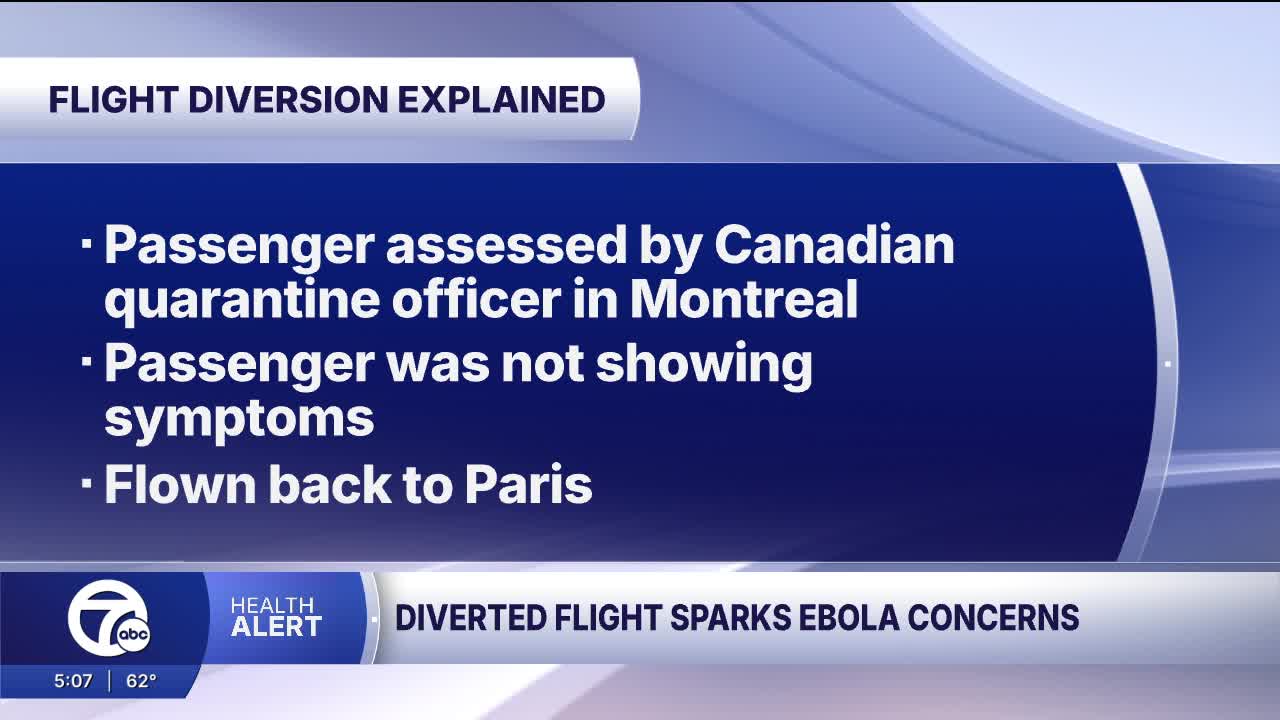
So, once the plane landed in Montreal, the passenger was assessed by a quarantine officer from the Public Health Agency of Canada. And it was determined that the traveler was not showing symptoms. That’s really important because Ebola is not considered contagious before symptoms begin. The Congolese passenger flew back to Paris and therefore did not continue on to Detroit.
Now, Ebola spreads through direct contact with body fluids like blood, vomit, saliva, urine, or other bodily secretions from someone who is actively sick. It can also spread through contaminated objects or surfaces. It is not considered an airborne virus like COVID or the flu. So, based on what we know so far, the risk to passengers on that flight appears to be very low.
Symptoms can appear anywhere from 2 to 21 days after someone is exposed to Ebola. They include fever, fatigue, headache, muscle pain, sore throat, vomiting, diarrhea, or stomach pain. In severe cases, bleeding can occur.
Now, if someone thinks they may have been exposed and then starts feeling sick, they should contact their doctor or local health department right away. It’s important to call ahead so healthcare teams can prepare and reduce any possible risk of spread. And while there is no vaccine or specific treatment for the Bundibugyo strain driving this outbreak, early supportive care can be lifesaving. That may include treating dehydration, keeping oxygen levels and blood pressure stable, managing pain, and providing proper nutrition.
At this point, CDC health officials say the overall risk to the public remains low, and there are no Ebola cases here in the US. It’s reassuring news, but health officials are continuing to monitor the situation closely.
This Week on the Dr. Nandi Show

Medical technology is certainly enhancing and extending our lives. Dr. Partha Nandi, MD, and his experts discuss how cutting-edge technologies like 3D printing and 3D bio-ink are shaping the future and bringing hope to patients and their families. Plus, a guest who watched her father’s health rapidly decline shares how a piece of her liver and a skilled surgeon gave her Dad his life back. Also, the potential for stem cells to fight a wide range of diseases, how artificial intelligence and machine learning save lives, and a new medical device brings a young woman peace of mind. Tune in this Saturday, May 23rd at 11:30 AM.
