

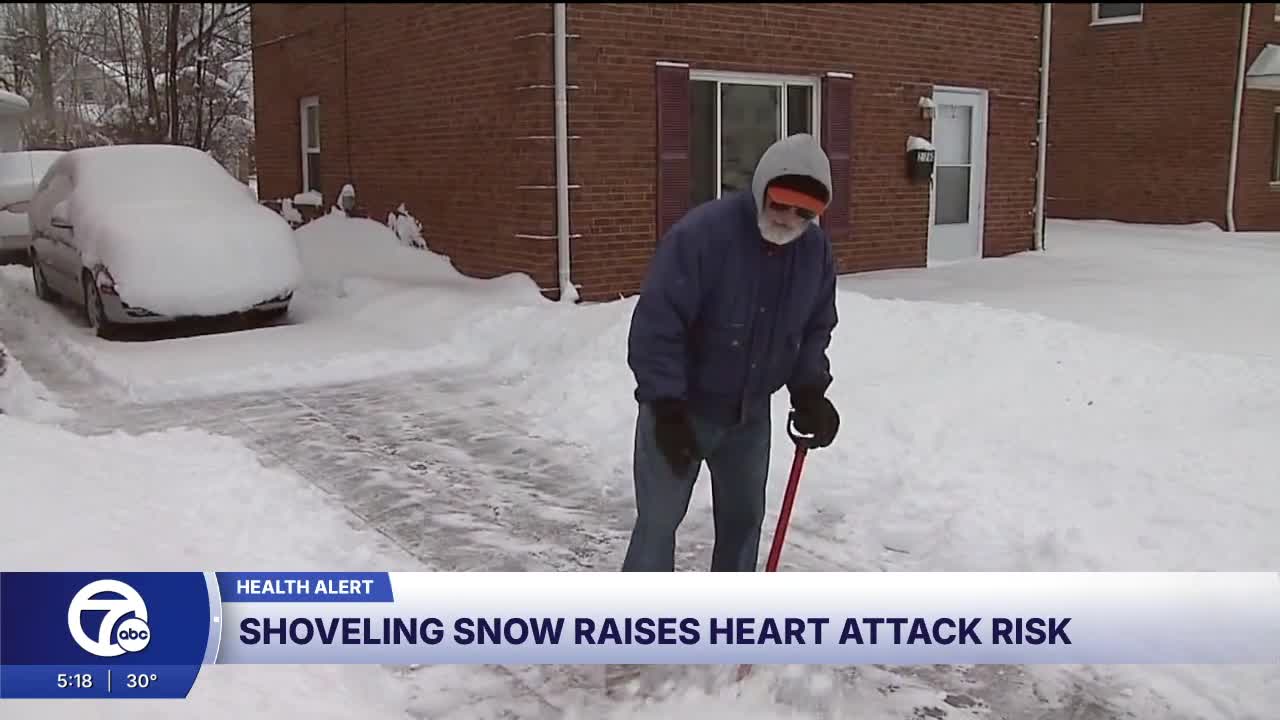


(WXYZ) — In today’s Health Alert, a reminder that clearing all this snow can be tougher on the body than it looks. And for some people, it can even raise the risk of a heart attack.
It’s surprising to many people because here in Michigan, shoveling feels like a normal household chore.
The problem is, the cold weather alone makes your body work harder just to stay warm. When you’re outside, you’re wearing layers of winter clothing, and that can make any physical activity harder. So, when you start lifting heavy, wet snow, your heart suddenly has to handle a lot more stress.
Now, most of the shoveling motion is arm work. That is tougher on the heart than using your legs. And when people lift a big load of snow, they often unconsciously hold their breath. And that spikes heart rate and blood pressure.
Another issue is the cold air. It tightens blood vessels throughout the body, including the coronary arteries, which are roughly the size of cooked spaghetti. That means your blood pressure is rising while your heart is working harder.
Shoveling snow can be particularly dangerous for people with heart-related risks - things like a sedentary lifestyle, obesity, smoking history, diabetes, high cholesterol, or high blood pressure. People with these conditions, or those who’ve had a heart attack, stroke, bypass surgery, or angioplasty, really shouldn’t be shoveling snow at all.
So, ask for help if you can. Around my house, I’m lucky - I’ve got three strong boys. When the snow piles up, we turn it into a family affair.
If you don’t have help, using a snow blower is a safer option. It still takes effort, but studies show your heart rate stays much lower than when you’re lifting snow by hand.
Now, if you have to shovel yourself, the key is to take it slow. Do a little at a time. Be sure to push the snow instead of lifting it. If you have to lift, use your legs, not your back. Keep the shovel close to you and avoid twisting.
And don’t forget to wear layers, a warm hat, gloves, and good footwear so you don’t slip. You can also cover your mouth and nose to warm the air you’re breathing.
Finally, listen to your body. If you feel chest pressure, shortness of breath, lightheadedness, or your heart feels like it’s racing, stop right away. And if the symptoms don’t go away, call 9-1-1.
