

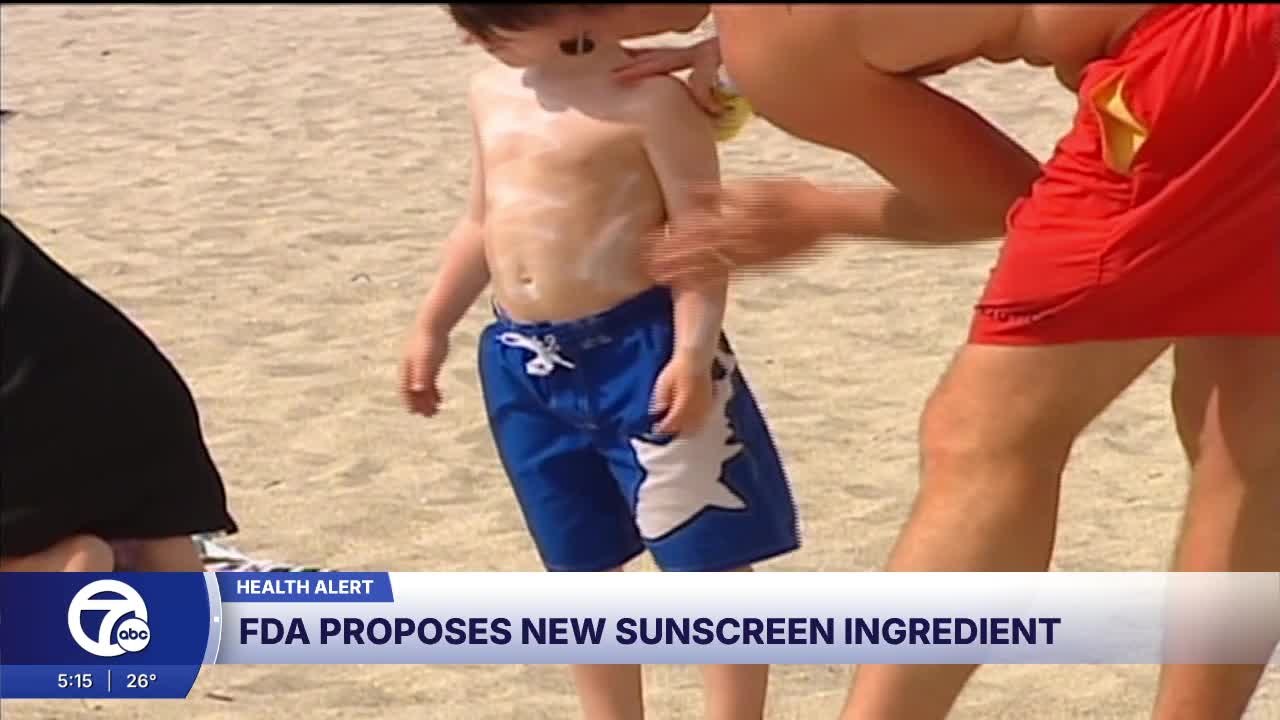


(WXYZ) — The Food and Drug Administration is moving closer to allowing a new sunscreen ingredient that is already used overseas. It’s called bemotrizinol.
When it comes to the sun, there are UVB rays that burn and UVA rays that age the skin. Both increase your risk for skin cancer. That’s why sunscreen is so important. you’ll find two main types on store shelves: mineral and chemical sunscreens.
Mineral sunscreens block both UVA and UVB rays, but they can leave a white cast on people’s skin.
Chemical sunscreens also protect against UVA or UVB, but no single chemical ingredient does both. So companies often mix several chemical filters together. This is where bemotrizinol comes in. It’s also a chemical sunscreen ingredient, but it works differently.
It’s broad-spectrum, so it covers both UVA and UVB rays. It’s very stable and doesn’t easily break down in sunlight like other chemical sunscreens. That means more reliable protection.
Another plus is tolerance. Some chemical sunscreens can be irritating and sting, especially for people with skin conditions like acne, rosacea or eczema. But bemotrizinol tends to be gentler and better tolerated.
Data reviewed by the FDA shows bemotrizinol has very low absorption through the skin. It mostly stays on the surface. It’s been used for a long time in Europe, Australia and some Asian countries.
Now, the FDA's proposal to add bemotrizinol as a safe and effective ingredient needs to go through a public comment period before the final decision. If everything stays on track, the agency could approve the active ingredient for use in sunscreens sometime next summer or fall. So we could potentially see bemotrizinol sunscreens on shelves by late 2026. If approved, it’d be the first new UV filter in the U.S. in more than 25 years.
For now, I recommend using a broad-spectrum, water-resistant sunscreen with at least an SPF 30. Be sure to reapply every two hours, and pair it with shade and protective clothing. That’s your best defense.
This Week on 'The Dr. Nandi Show'
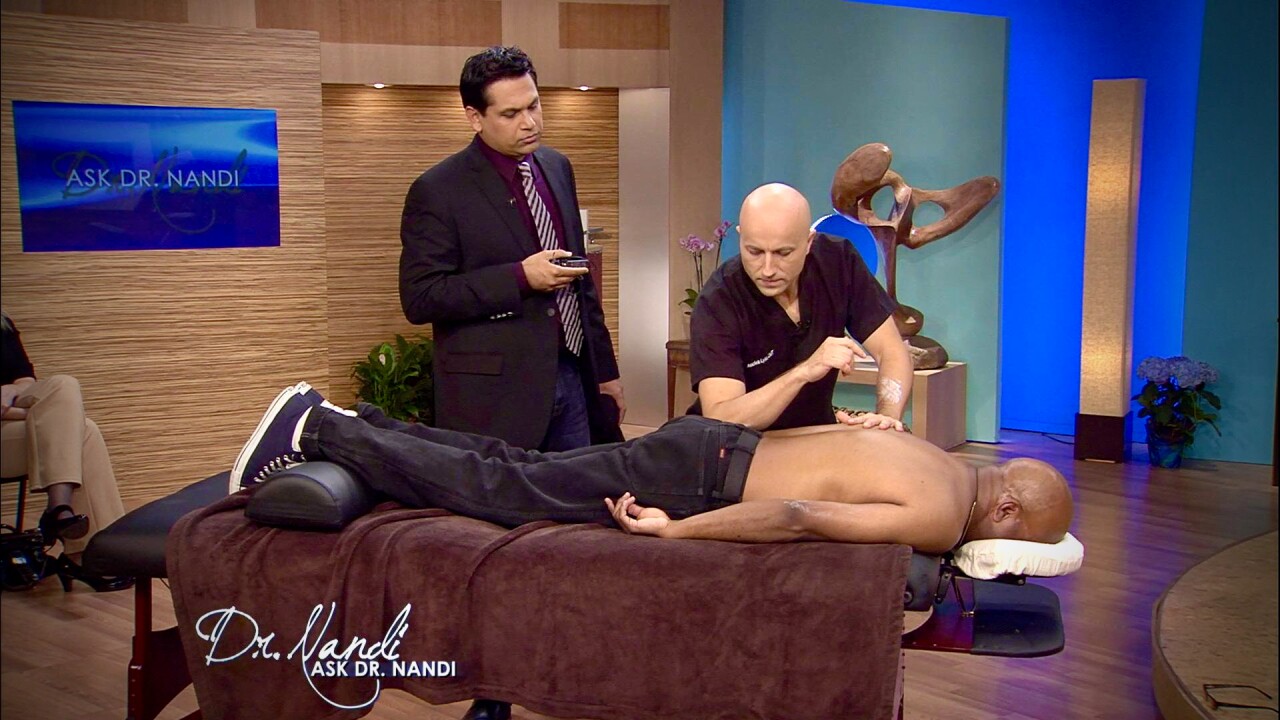
Explore how deep tissue massage can ease pain, calm stress and boost overall well-being. Dr. Partha Nandi, MD, breaks down what happens during a massage and how it can help with issues like chronic pain, muscle tightness, fatigue, anxiety, depression and even asthma. Ironman athlete Missy Rush shares how massage became a natural way to manage her MS symptoms and get better sleep. A massage therapist explains why regular treatments can improve mood, balance and productivity. You’ll even see a live demo on set, including their signature “helicopter technique.” Tune in this Sunday, Dec. 14 at 5 p.m.
