



(WXYZ) — Doctors are concerned that the Centers for Disease Control and Prevention’s move away from routinely recommending meningococcal vaccination could leave more young people vulnerable. While rare, cases of this deadly infection have increased since 2021.
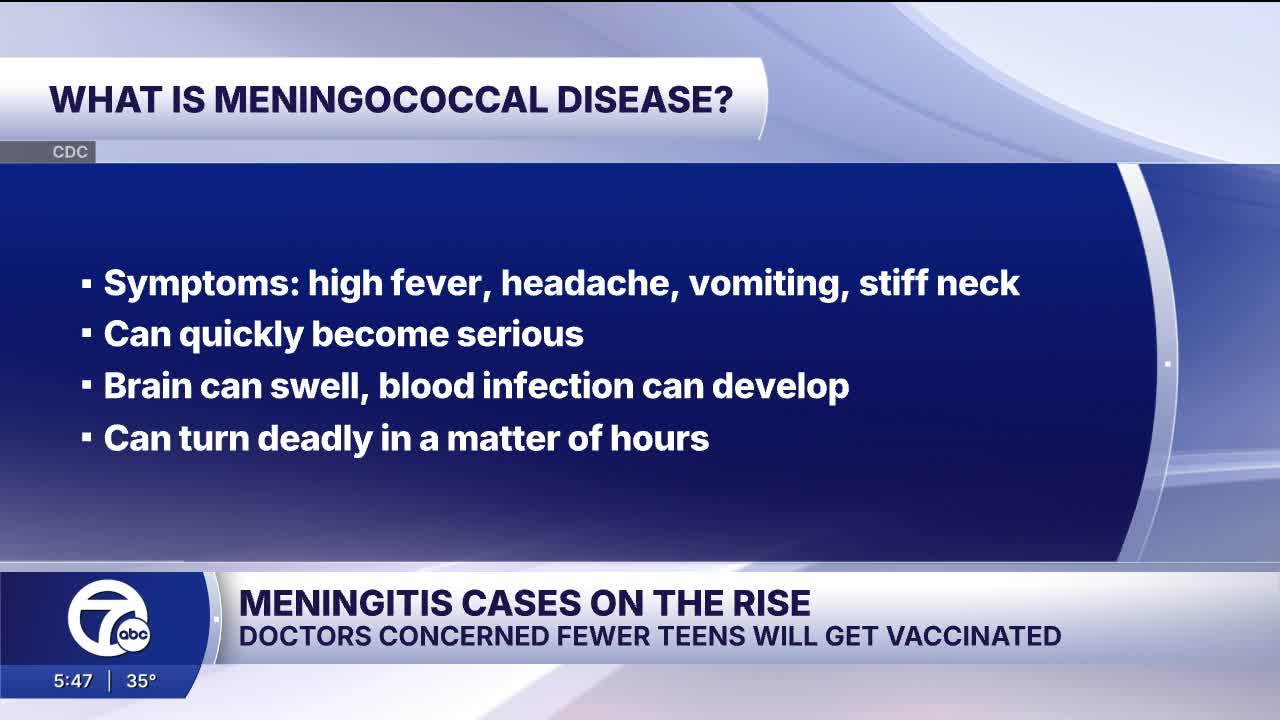
This is an infection caused by a bacteria called Neisseria meningitidis. Now, it is considered rare — in the U.S., around 3,000 people each year are diagnosed with bacterial meningitis. That may sound small, but this illness moves fast. Symptoms like a high fever, a bad headache, vomiting and a stiff neck can come on suddenly.
What makes this so concerning is how quickly it can become serious. The brain can swell, blood infections can develop and it can turn deadly in just a matter of hours. Even with rapid treatment using antibiotics, about 15% of patients don’t survive. Among those who do, as many as 1 in f5 will have brain damage, deafness or hearing loss, nervous system problems or amputated limbs.
That’s why doctors focus on prevention. Teenagers, college students living in dorms and people with weakened immune systems are at higher risk because this bacteria spreads through close contact like coughing, kissing or sharing drinks.
Rates have been rising since 2021, but the CDC reported more than 500 cases in 2024. That’s the highest number in over a decade. Many were linked to a Y strain of the bacteria, which is included in the vaccine. That could be because the bacteria mutated, vaccination rates have declined or likely a bit of both.
As for safety, the CDC says meningococcal vaccines are safe and well-tolerated. Most side effects are mild, usually lasting one to three days. With the MenACWY vaccine, the most common side effects include soreness or swelling at the injection site, muscle pain, headache and feeling tired. It’s the same with the MenB vaccine, but a low-grade fever can also happen.
Now, we know the vaccines work. After the CDC recommended all adolescents get the MenACWY shot in 2005, cases dropped by 90%.
It’s also important to know that while the CDC has moved meningococcal vaccines to what they call shared clinical decision-making, the American Academy of Pediatrics still recommends these routine vaccinations at ages 11 or 12, with a booster at 16.
My concern is that if fewer teens are vaccinated, we could see cases rise. So that’s why parents should talk with their pediatrician about protecting their teen from meningococcal disease.
