



(WXYZ) — Rising military actions between the United States, Israel and Iran continue to make headlines. Even though it’s happening thousands of miles away, many Americans say they’re feeling uneasy and tense about what the future holds.
It’s completely normal to feel upset, anxious or even fearful when we see images of destruction and violence. Even if the conflict is happening overseas, our brains don’t always separate “far away” from “threat.” When we’re exposed to coverage of bombings and military responses, it can trigger what experts call anticipatory anxiety: fear of something that hasn’t happened, but feels like it might.
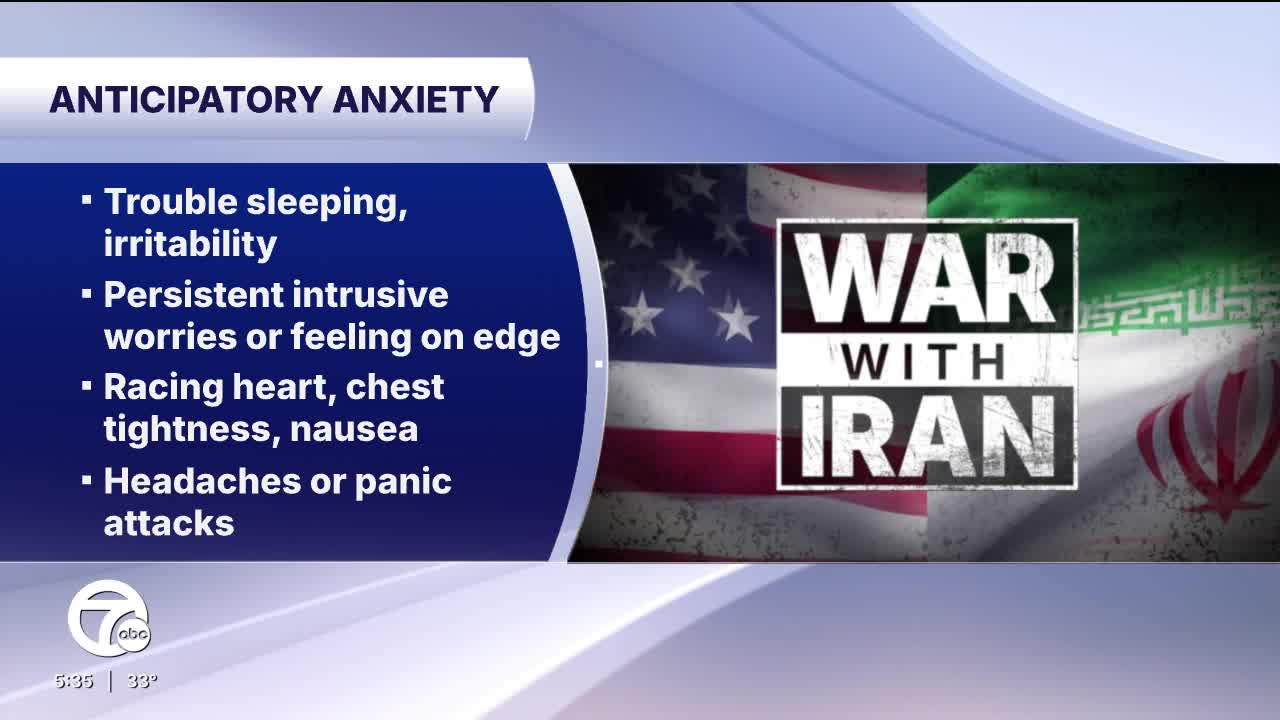
That can show up in different ways. Some people notice trouble sleeping, irritability, persistent intrusive worries or feeling on edge. Others feel it physically — a racing heart, tightness in the chest, nausea, headaches, even panic attacks. For people who have experienced trauma before, including veterans or those with existing anxiety disorders, this type of coverage can be especially triggering.
The first step to manage stress and protect mental well-being is to limit doomscrolling. It’s important to stay informed, but you don’t need a constant feed of breaking updates because your nervous system could stay in a heightened state of stress.
Second, it’s really important to move your body. Exercise releases chemicals in your brain that improve mood and reduce tension. The weather is warming up this week, so take a brisk walk, consider a bike ride or do some yard work.
Also, practice simple calming techniques. Try things like meditation, prayer, yoga, or deep-breathing exercises. They can help to lower your heart rate and regulate stress.
It’s also essential to stay connected. Talk to family or friends about how you’re feeling. Anxiety often grows in isolation, but connection brings a sense of belonging and reassurance.
And finally, protect your sleep. Turn off notifications before bed and keep a consistent routine. Rest is critical for emotional balance.
If you find anxiety is interfering with your life, please talk with your doctor or a mental health professional. You can also call or text the 24/7 SAMHSA Disaster Distress Helpline at 800-985-5990. It’s free and confidential.
So, it’s natural to feel concerned about the military escalation in the Middle East. But focusing on what you can control in your own life — like routines, connections and self-care — can make a real difference when it comes to protecting your mental health.
