



(WXYZ) — In today’s Health Alert, states across the country are dealing with what some are calling the “super flu,” and it’s driving record hospitalizations. Experts warn the season could get worse before it gets better.
This season is really hitting hard. At my practice, nurses and staff have been getting sick, and we’ve had patients reschedule due to the flu.
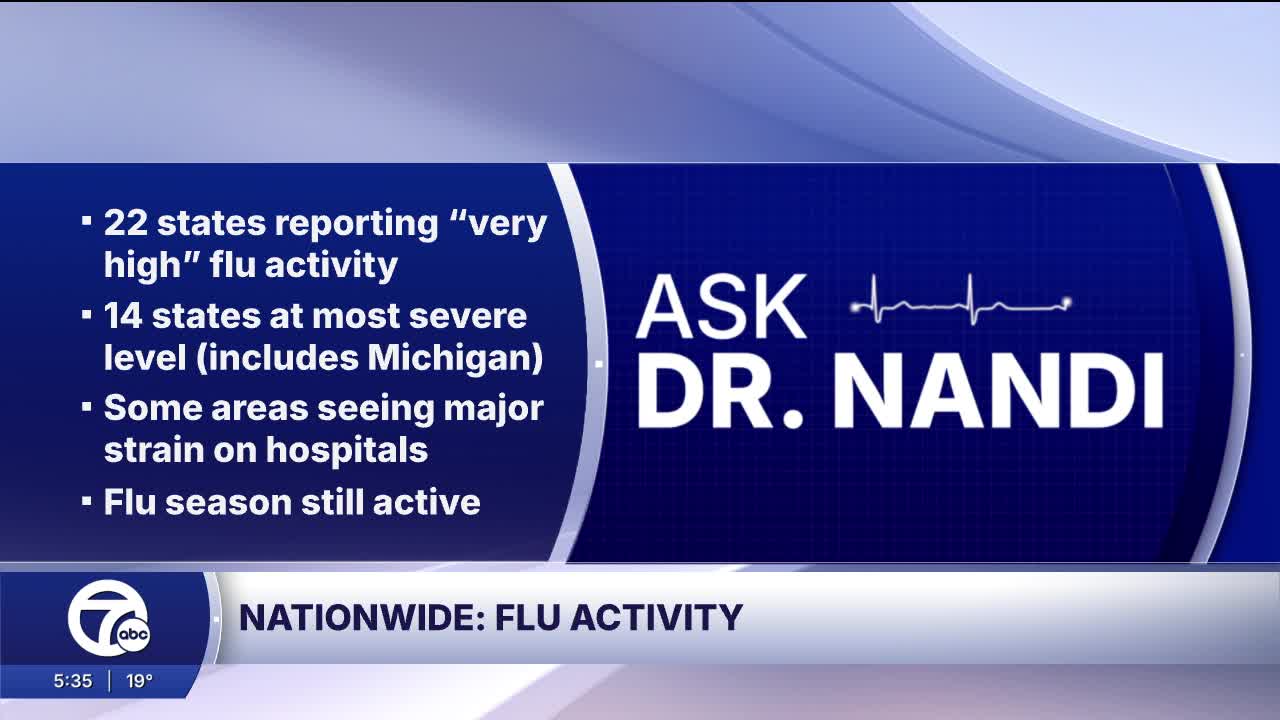
Nationwide, twenty-two states were reporting ‘very high’ flu activity for the week ending January 3rd. Fourteen of those states, including Michigan, are at the most severe level. Some are being hit especially hard. For example, in Colorado, hospitalizations have reached the highest level in over 20 years, and about one in four flu tests come back positive.
Nationwide, weekly flu hospitalizations jumped 53% from the week before, and cumulative hospitalizations, which track the total rate for the season, rose 37%.
Here in Michigan, respiratory illnesses now make up more than 10% of outpatient visits, which is above the national average. We recorded more than 5,900 flu cases for the week ending January 3rd.
The CDC estimates at least 15 million illnesses, more than 180,000 hospitalizations, and over 7,400 deaths nationwide so far this season.
‘Super flu’ is not a medical term. We usually hear that phrase in tough flu seasons. This year, we have a new mutated H3N2 strain, called subclade K, and it’s spreading fast.
Symptoms can look like typical flu - fever, body aches, cough. Some people may also have vomiting and diarrhea. But, doctors are seeing longer fevers lasting 3 to 5 days, and coughs that make breathing difficult. This can make people feel worse and raise the risk of hospitalization, with children and seniors especially vulnerable.
As for whether this season will get worse, nationwide flu test positivity rates are starting to ease after several weeks of surges. Michigan saw a slight dip in early January after six straight weeks of increases. But the virus is still very active, and flu can be unpredictable.
The good news is it’s not too late to get a flu shot. Even though subclade K wasn’t included in the vaccine because it emerged after production began, research shows that protection against the subclade K strain rises from 11 percent to 39 percent after vaccination. Plus, the flu shot still covers other circulating strains, giving extra protection.
And as always, wash your hands, stay home if you’re sick, and seek medical care if symptoms become severe - like dehydration, high fever, extreme fatigue, or trouble breathing.
This Week on the Dr. Nandi Show:

35% of women have experienced intimate partner violence or non-partner sexual violence, according to the World Health Organization. In this episode, Dr. Nandi discusses sexual violence, focusing on sex trafficking and rape. He speaks with two women who share their experiences of sexual violence to inspire change. Dr. Nandi also explores how to start healing from traumatic sexual assault and what society can do to create change. Tune in this Saturday, January 17th, at 1 pm.
