



(WXYZ) — Ultra-processed foods are raising concern again. This time, two new studies suggest they may impact fertility in both men and women.
We’ve known that ultra-processed foods aren’t great for your body. But they may also be affecting the ability to start a family.
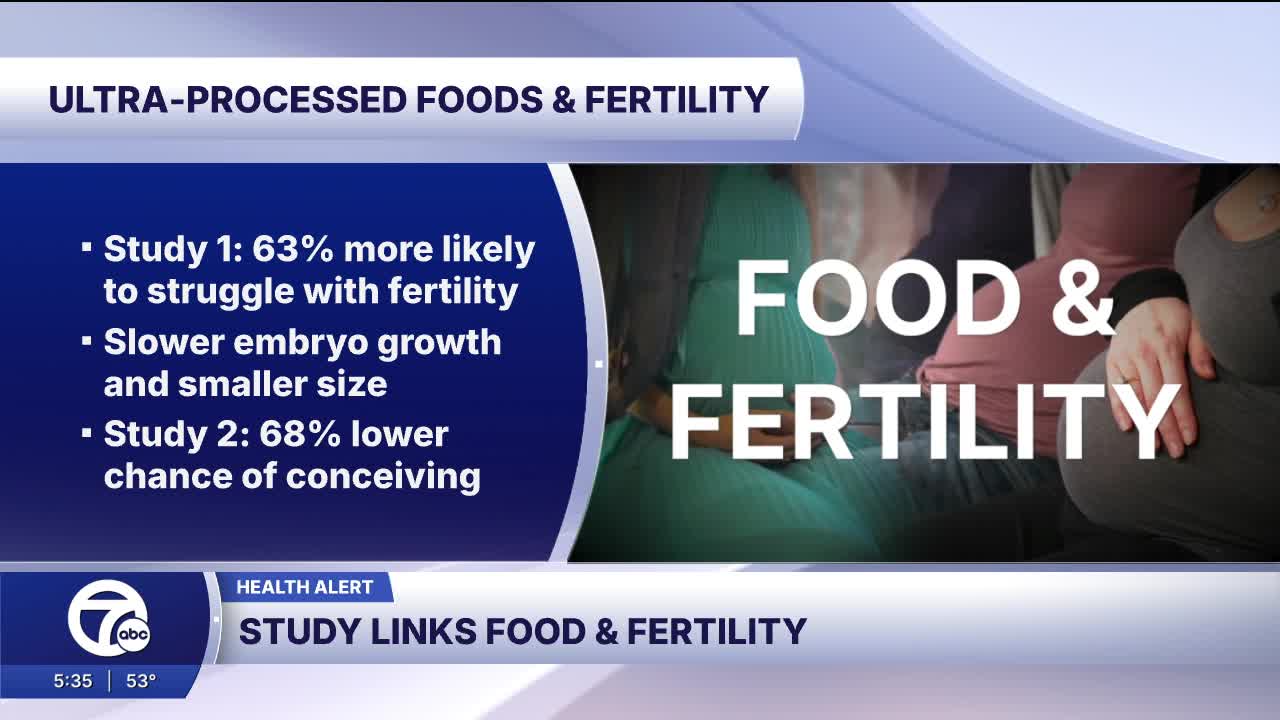
Now, one study that was published in the journal "Human Reproduction," found that men who ate higher amounts of these foods were 63% more likely to struggle with fertility. It also took longer for couples to conceive. And once they did, researchers saw slower embryo growth and smaller size at seven weeks.
In a separate study, published in "Nutrition and Health," results showed that women who ate more ultra-processed foods had about a 68% lower chance of conceiving.
So, what might be going on here? Ultra-processed foods are things like chips, sugary drinks, frozen meals, and packaged snacks. They’re made with added sugars, unhealthy fats and a lot of additives to improve taste and shelf life. But this time, it’s not just about calories or weight. These foods can carry chemicals like BPA, phthalates and acrylamides, which may transfer from packaging or the machines used to process the food. They can disrupt hormone balance, which is important for both sperm health and ovulation.
First, it would be best to cut out or limit packaged and ready-to-eat foods. Instead, focus on whole, minimally processed foods. Think fruits, vegetables, lean proteins, whole grains and healthy fats.
Second, avoid habits that can lower fertility. That includes smoking and alcohol. Both can also affect the baby’s health and the overall health of the parents.
Also, aim for a healthy weight, because being underweight or overweight can interfere with ovulation and sperm health. On top of that, both partners should limit caffeine to less than 200 milligrams a day, manage stress and avoid overly strenuous exercise.
Finally, if you’ve been trying and not having success, it’s important to check in with a health care provider. There can be underlying medical issues, like ovulation disorders or sperm concerns, that need attention.
Fertility is a shared effort. With ultra-processed foods now accounting for up to 60% of daily calories consumed in the U.S., both partners should consider lifestyle changes. They could make a real difference and give couples the best chance of a healthy pregnancy.
This Week on the Dr. Nandi Show

What if everyday clumsiness was trying to tell you something? Dr. Partha Nandi, MD, explains the symptoms, testing and treatment options for multiple sclerosis. A guest shares how simple tripping led to her diagnosis — which was frightening at first — and how learning more about MS helped her move forward with confidence. A neurologist also discusses who may be at higher risk and why treatment must be individualized. Tune in this Sunday, March 29 at 5 p.m.
