

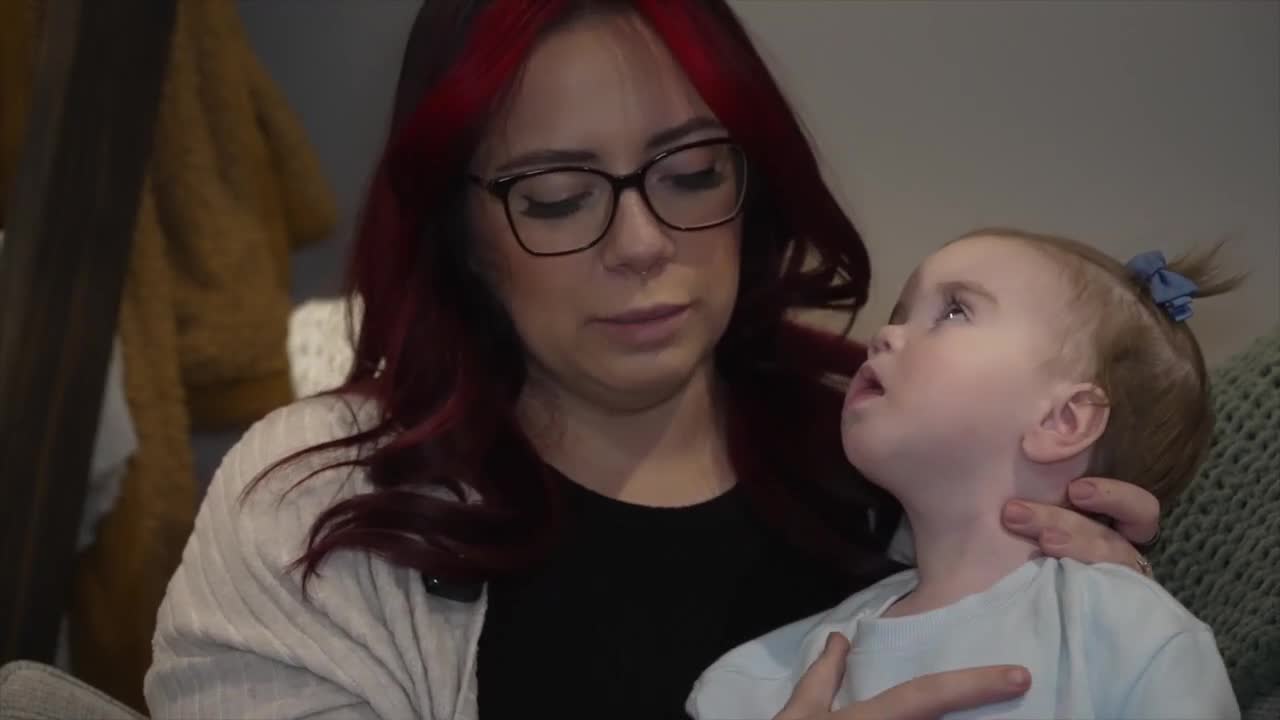


WATERFORD, Mich. (WXYZ) — An 11-month-old girl is battling one of the rarest genetic disorders in the world, a condition that affects fewer than 100 people.
Watch Jeffrey Lindblom's video report:
Lorelei lives with CACNA1E, a severe neurological condition discovered in 2018. Her daily life involves mobility challenges, a feeding tube, and frequent seizures.
"She has a rare genetic disorder called CACNA1E," Kayleigh Dunn said.

Patrick Lawlor is Lorelei’s neurologist and sees her frequently.
"Probably fewer than 100 in the world. The lack of progress is something that really signals how severe her disorder is. Probably one of the most severe children I’ve taken care of," Lawlor said. "She has clusters of brief seizures. Sometimes 10 or 20 times per day."

"I think even harder than her seizures is that she has no mobility. No head control or upper body control," Dunn said.
Dunn described the seizures and feeding tube as just a part of life, but the reality remains difficult.
"Even though we’re desensitized. It breaks my heart to see her like this," Dunn said.
Lorelei requires around-the-clock attention, and her family is overwhelmed by mounting medical bills. Dunn said her daughter has lost some of her personality due to medication, but she remains vocal despite being nonverbal. Bath time is a favorite activity for the baby.
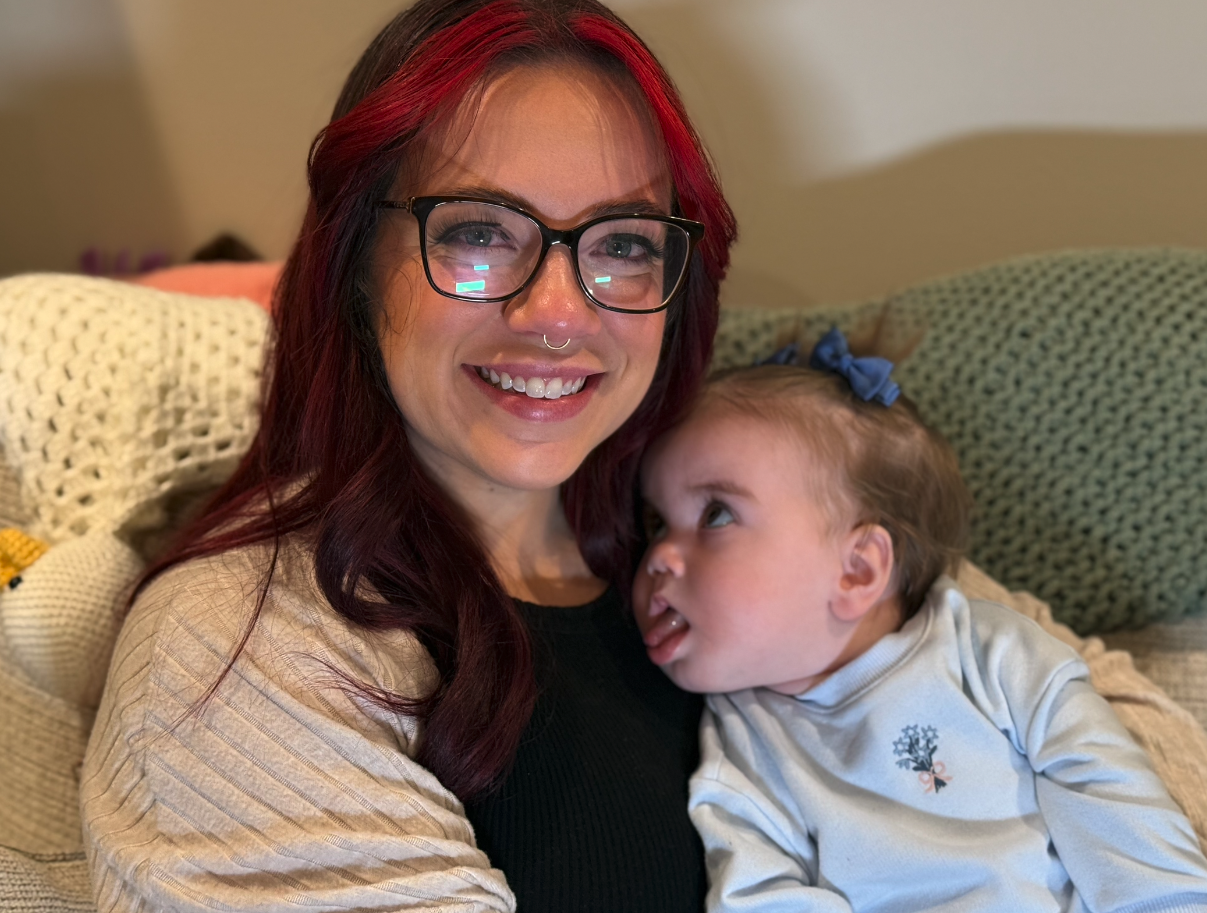
"For someone who is non-verbal. She is very vocal," Dunn said.
On Epilepsy Awareness Day, Dunn hopes more people get tested for neurological conditions. She also hopes trial and error will lead to improvements for Lorelei.
"It’s possible it could improve her seizures, her development. It could be transformative in the best case," Lawlor said. "I really admire her family and how well they take care of her."
"I just want her to know I tried everything I can to make her better," Dunn said.
The University of Michigan’s CS Mott Children’s Hospital has set up a fund to support precision treatment for Lorelei.
A family friend of Dunn's set up a GoFundMe to help her with mounting medical bills, and treatment insurance doesn't always cover.
———
This story was reported on-air by a journalist and has been converted to this platform with the assistance of AI. Our editorial team verifies all reporting on all platforms for fairness and accuracy.
