

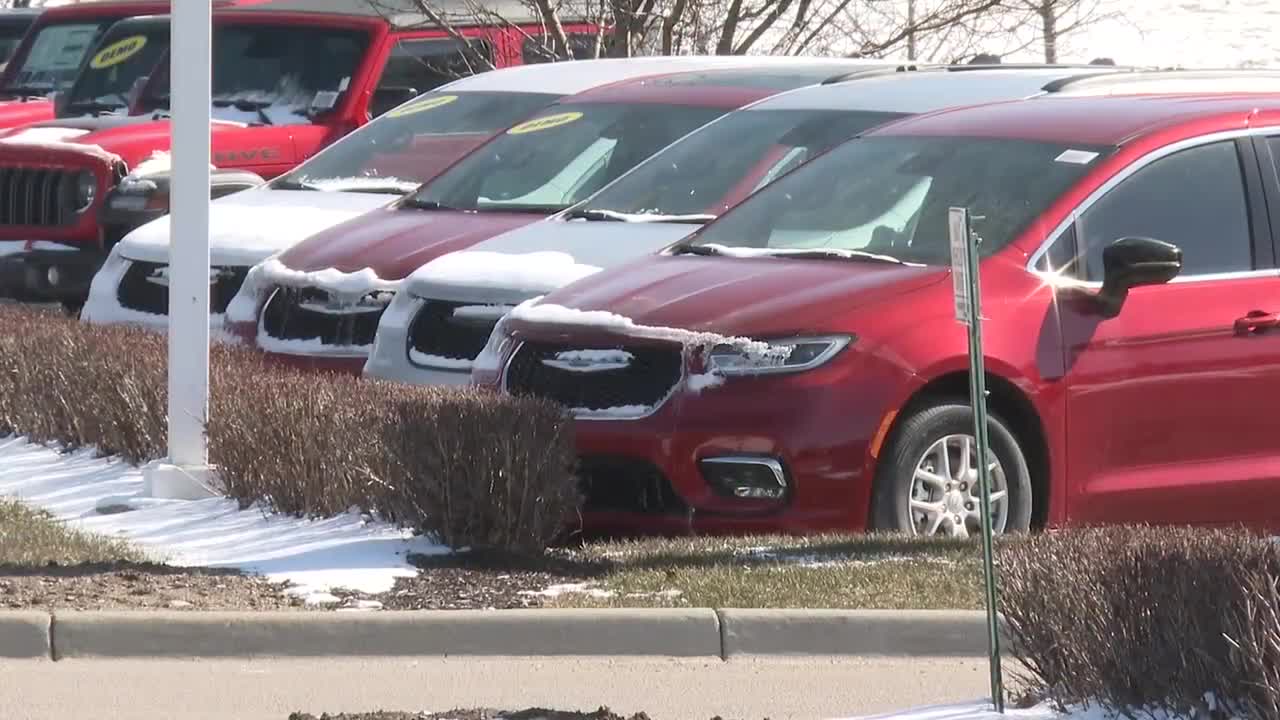


SOUTHFIELD, Mich. (WXYZ) — Months after auto tariffs took effect, the impact is still rippling through dealerships, automakers, and drivers. Prices haven't come back down, and some experts warn they will likely climb even higher.
Watch Peter's report below

For potential new car buyers like Jeff Leitson, the increase in new car prices isn't turning him away from trying to score a deal.
"Like most people, I can't do anything about the tariffs," Leitson said. "If the tariff is stopping you, that is surprising."
Jeff has been doing his research on buying a new car by trading in his 2016 Subaru, and believes dealers may actually be making more on trade-ins right now than on new car sales.
"Depending on your negotiating, the trade-in price for your car is at a premium. The dealer is making more on the trade-in than they are making on the new car," he said.
And if you're in the same position as Jeff in shopping and potentially buying a new car, you might be in luck when it comes to the price.
"A year ago, we all thought the prices were going to go up immediately, and that did not happen," said John McElroy, an Automotive Industry Expert.
According to Kelley Blue Book, the average new car price is $49,191, a slight decline from the record-setting new car price of $50,325 in December of 2025.
McElroy said automakers have been absorbing most of the tariff costs on new vehicles sitting in dealer lots.
"So far, automakers have eaten most of those costs, and we see it in their financials; they're down by billions of dollars," McElroy said.
That tracks with recent earnings reports from major automakers like Ford, General Motors, and Stellantis, which have shown declining profits for 2025. McElroy said automakers are still passing some of those tariff costs down to the consumer in different ways, with fewer dealer incentives and with hidden fees.
"We've already started to see automakers increase prices, though they're doing it in tricky ways, so, for example, the destination charges have gone up significantly," McElroy said.
That destination fee is the cost to cover the expense of transporting the vehicle from the factory to the dealership, and it typically costs $1000-2000, depending on the vehicle.
George Glassman, President of Glassman Automotive Group, said it's just a matter of time before new car prices increase.
"The increase in tariffs, if it goes through, will not be positive for the consumer," Glassman said. "The manufacturers, if hit with tariffs, are going to ultimately pass them down to the dealer, and unfortunately, it will result in higher prices."
And as for Jeff, he said if he has to wait to buy, he will.
"Otherwise we're going to be forced, like everyone else, wait it out, buy sometime, and keep driving our 2016."
