
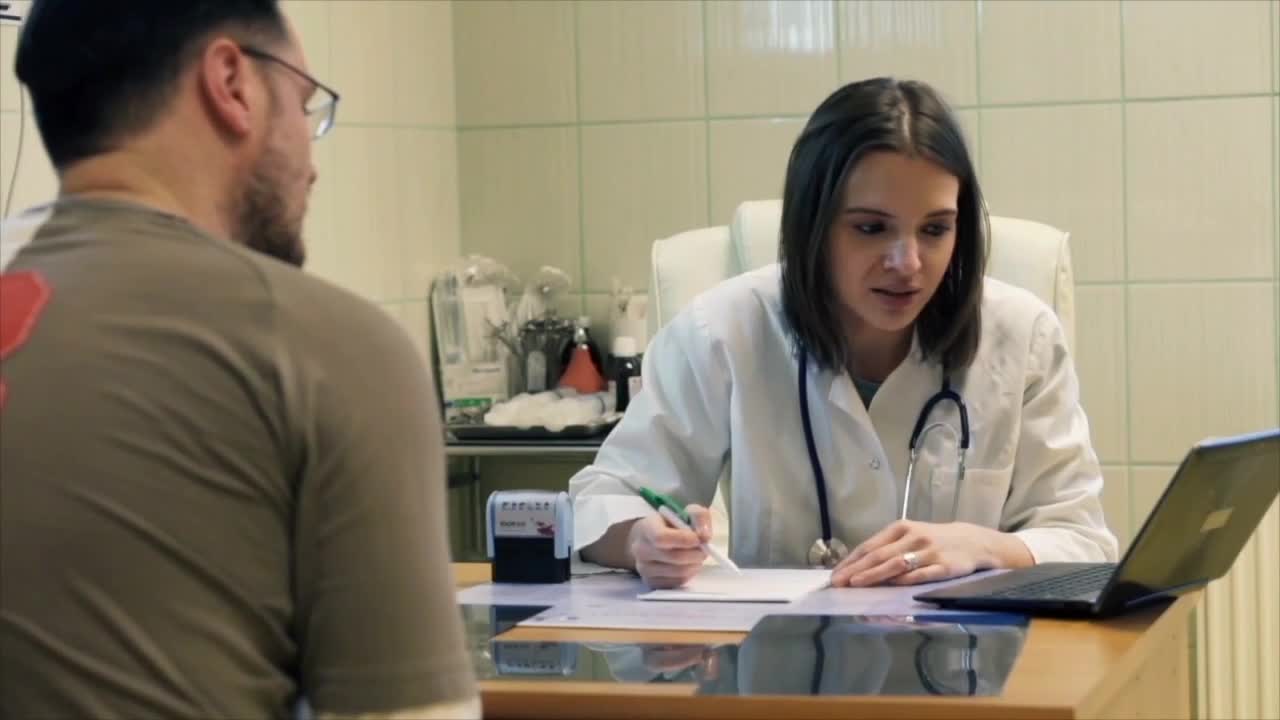


(WXYZ) — March is Colorectal Cancer Awareness Month, and it's a cancer that has traditionally been considered a disease of older adults. But doctors tell us that's no longer the case, as younger people are being diagnosed at rising rates.
It's a trend highlighted by the death of Black Panther star Chadwick Boseman and Dawson's Creek actor James Van Der Beek.
We spoke with a metro Detroit woman who said her symptoms were easy to miss and a medical oncologist about the growth in colon cancer in young adults.
Watch Keenan's report below
"What went through your mind when you heard you had colon cancer?" I asked Jamillah Sherman.

"Well, the first thing was, 'no, I don't, because I'd already had cancer,'" she replied.
At 42 years old, Jamillah Sherman never expected to hear the words colon cancer. The corporate executive had already beaten leukemia as a child, and now cancer was back.
"I started feeling really tired and really run down, and I started to digest things differently than I had before," Sherman told me. "And I thought, 'oh, well, I'm aging. You know, this is all normal. This is fine.'"
But what seemed like small changes turned out to be something much more serious. Doctors discovered a tumor attached to her colon.
Jamillah’s diagnosis is part of a growing national trend. Long thought to be a disease afflicting those in their late 50s and beyond, over the last 2-3 decades, colorectal cancer is increasingly being diagnosed in younger adults.

"We're seeing more patients who are under the age of 50, and certainly I've seen patients even in their 20s. And this has been a new thing for us," said Philip A. Philip, MD, a medical oncologist at Henry Ford Health.
Doctors aren't entirely sure why the diagnosis is increasing in young adults, but doctors are certain that lifestyle factors, diet, obesity, and changes to gut bacteria may all play a role. But one major concern is that younger adults often dismiss early warning signs, or they don’t take them seriously.
"So people have to really see their doctors if they have symptoms. Abdominal pain, pain in the abdomen, difficulty in opening the bowels or changes in the bowel habits that are not typical for you," Dr. Philip said.
That rising trend is also why screening guidelines have changed. Most adults are now advised to start screening at age 45 instead of 50, but that's for a person of average risk. Colorectal cancer screenings should begin even earlier for someone at higher risk, such as anyone carrying a specific gene predisposing them to chronic cancer or someone with a first-degree relative with colorectal cancer. They may need to start screening a decade earlier or more.
And the reason why? When the disease is caught in the pre-cancerous stage or stage one, the outlook is dramatically better.
"Those patients do very well," Dr. Philip said. "Those patients, almost, you can say that 90 percent plus are cured of the disease."
But if the disease advances, the outlook is not as bright.
"And if you have stage four, less than 50 percent of the patients can be cured," Dr. Philip said.
Jamillah Sherman’s colon cancer was discovered at stage two and had attached to one of her ovaries and stomach, which was a frightening finding.
"That sounds pretty bad," I replied to her.
"It was big, but it wasn't aggressive," Sherman followed up with.
Jamilliah underwent immunotherapy, and now she's cancer-free. She credits her doctors and her faith community for seeing her through this life-threatening challenge. She hopes her experience encourages others to listen to their bodies, especially those under 45.
"You only get one you, and that should be one of your highest priorities, making sure that you are doing everything that you can to keep this working in good working order," Sherman said.
Doctors say symptoms like blood in your stool, persistent fatigue, or unexplained changes in bowel habits should always be checked out if they last more than a few weeks. Colonoscopies are the gold standard, but colon prep can scare away a lot of people. There are less invasive but less accurate tests, which may require a colonoscopy anyway.
Which test is the best for you? Dr. Philip said the best test is the test the patient is willing to take.
Related: What you need to know about colorectal cancer, from Dr. Nandi
