

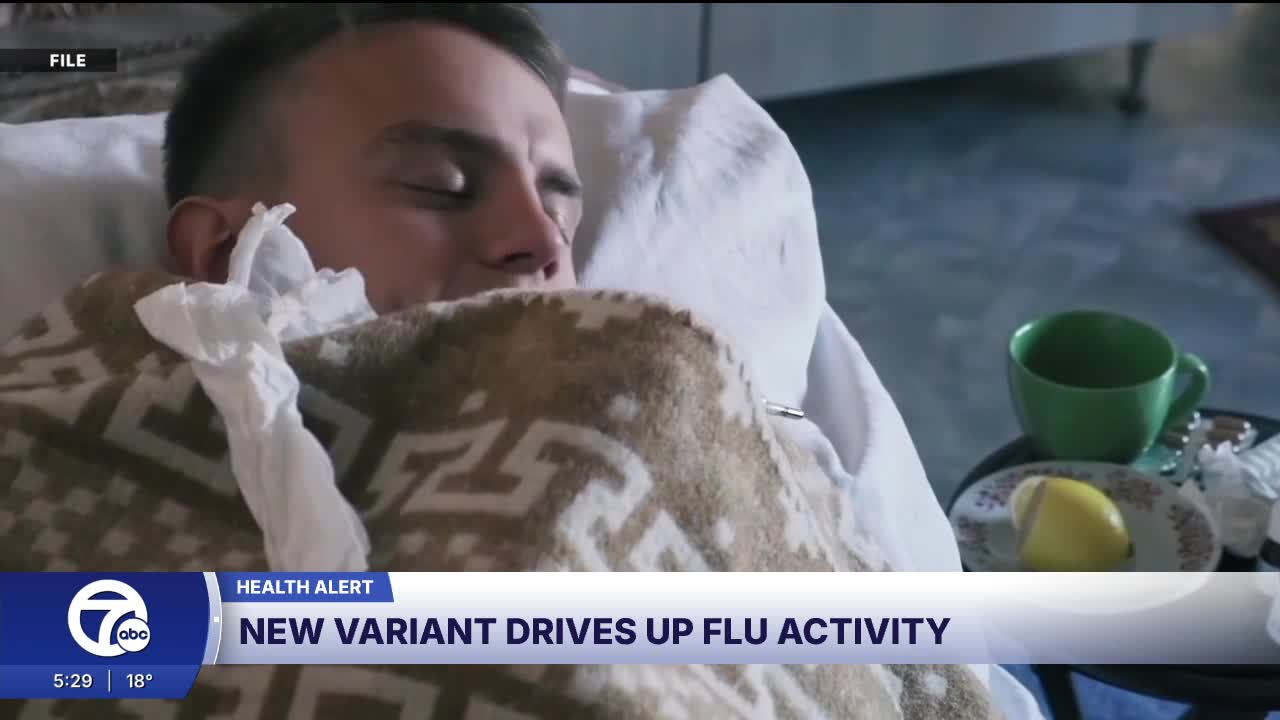


(WXYZ) — In today’s Health Alert, flu season is officially underway, with doctor visits for fever and cough climbing fast. A new flu variant is now the dominant strain.
Flu activity has recently passed the epidemic threshold. Across the country, rates are uneven, but flu activity is rising earlier than usual in places like New York. Hospitalizations there have been doubling in recent weeks, and that rapid climb suggests this virus is spreading quickly.
We’re also seeing an increase in flu activity among school-aged kids. And once that starts, it tends to spread to parents, grandparents, and older adults.
Now, will this season be as bad as last year? It’s not common to see two back-to-back severe flu seasons. But here’s what’s different. We’re dealing with a new flu variant, known as subclade K. It’s a variant of influenza A, H3N2. Seasons dominated by H3N2 tend to be tougher, especially for older adults.
This year’s flu shot was chosen before this variant was identified, so it’s not a perfect match. But the strains in the vaccine are closely related. So far, early data from the United Kingdom shows that in kids, it reduced the risk of an ER visit or hospitalization by nearly 75%. In adults, including seniors, it cut severe illness by about 30% to 40%. That protection is lower, but for many folks, any protection is better than none.
Now, it takes about a week after vaccination for your immune system to fully respond. So, if you get vaccinated now, your body can be ready by Christmas. In my own home, my family and I have already gotten the flu shot — especially my kids. Flu vaccination rates in children are the lowest they’ve been in years. Tragically, the first pediatric flu death of this season has already been reported. Last season was the deadliest flu year on record for kids, and most of those children were unvaccinated.
Beyond vaccination, other tips to lower your risk include washing your hands often, using air purifiers indoors, cleaning high-traffic areas, and considering masking in crowded places, especially during travel.
The flu hits fast with fever, body aches, and chills. If that happens, get tested early. Antiviral medications work best when started within the first 48 hours.
Flu season is here. But it’s not too late to get your flu shot before the holiday gatherings and reduce how hard it hits our families.
