



(WXYZ) — If you feel like there's still a lot of coughing and sneezing at work, school and at home – you're not wrong.
Doctors across metro Detroit say winter viruses are sticking around longer than usual this season, and some symptoms are lingering for weeks.
See the full report in the video below
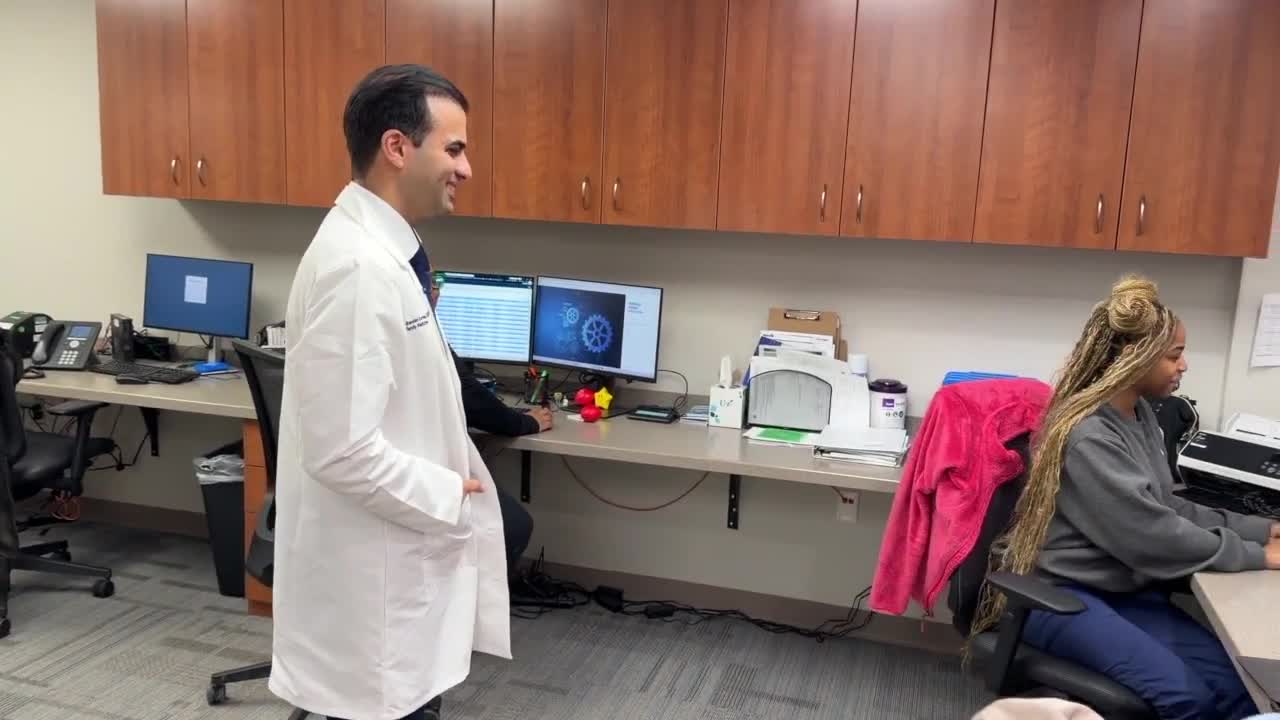
At Orchard Primary Care in Farmington Hills, Dr. Brandon Karmo said it has been a busy cold and flu season. Karmo is also the president-elect of the Michigan Academy of Family Physicians.
"A lot more than we're normally used to. Flu, COVID, the common cold," he said.
Karmo said one of the biggest trends he's seeing isn't a brand-new illness. Instead, it's what happens after you recover.
"You've seen people where this cough just lingers, weeks, sometimes even months. And really, what it is, it's a hypersensitivity in the airways," Karmo said.
Also, a lot of inflammation, despite you not being sick or contagious. Nearly 40% of patients develop a post-infectious cough after COVID, the flu or even a simple cold. The best treatment is old-school basics.
And a lot of inflammation. But you’re not sick or contagious. Nearly four in ten patients develop a post-infectious cough after COVID, flu, or even a simple cold. The best treatment? Old-school basics.
"It's just fluids, supportive care. Tea with honey and just giving it time," Karmo said.
The flu is still circulating, too, even though the peak may have passed. Karmo's advice for travel and crowded spaces.
Flu is still circulating too, even though the peak may have passed.
His advice for travel and crowded spaces?
"Wash your hands. If you don't feel well, just for the courtesy of others, stay home. Wear a mask in crowded areas," Karmo said.
At Corewell Health in Novi, Dr. Asha Shajahan saw a swell of the flu this season.
"Especially influenza A. That has kind of come down a little bit. There is still the cough and cold going around, sinusitis, that type of thing," Shajahan said.
Sinusitis is the inflammation of the sinus lining, commonly caused by viral infections like colds, allergies, or bacterial infections that block mucus drainage.
Symptoms include facial pressure or pain, thick nasal discharge, headache, and congestion. Treatment usually involves rest, fluids, saline rinses, and decongestants. She’s also seeing GI bugs like norovirus.
"We're indoors more, gathering around people indoors more, then those bugs kind of circulate and we can get infected easier," Shajahan said.
Also, she said the icy conditions are sending more people to the doctor.
"A lot of bruising, back pain, like a lot more falls this year than before. So I would definitely say be careful," she said.
Her advice? Wear boots with grips and take it slow.
Meanwhile, Wayne State University pediatric and internal medicine specialist Dr. Eric Ayers says flu is still spreading quickly, especially among kids and older adults.
"Are you seeing it remain unchanged and still spreading pretty rapidly?" I asked.
"I would say that the latter, that it's unchanged in spreading very rapid," Ayers said.
That's in both in Detroit and across metro Detroit. Wastewater surveillance by The Wigginton-Eisenberg Laboratory at the University of Michigan shows Mount Clemens being hit hard by Influenza A & B, RSV, and COVID.
Ayers says parents should trust their instincts and watch sick kids closely for signs of distress.
"So they're not getting enough oxygen. So then they become fatigued, tired, sleepy; not as energetic, or not as active as they should be," Ayers said.
Then it’s time to get help. He’s seeing RSV hit adults harder than before and norovirus and other stomach bugs popping up in schools and workplaces.
His message to people is "hand-washing, hand-washing, hand-washing; is very important."
The good news is that spring is just over a month away and with the warmer weather, these seasonal viruses will fall off, just in time for allergy season.
