
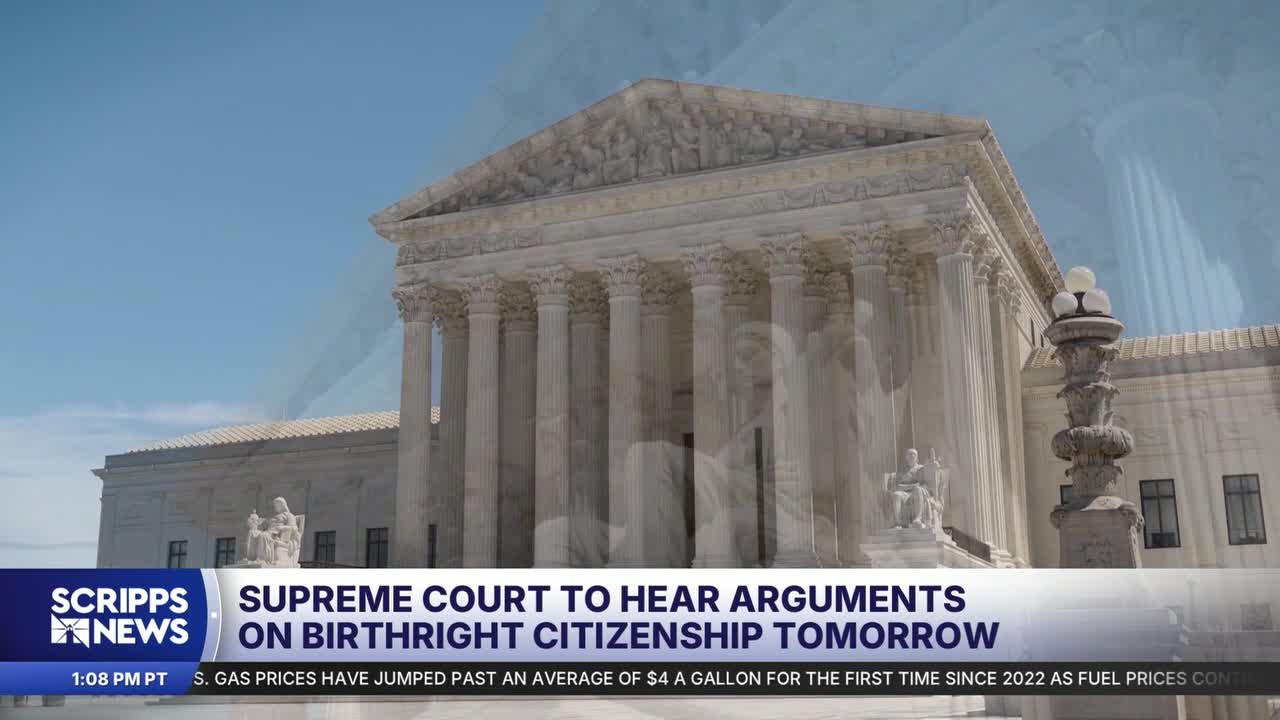


Wednesday the Supreme Court hears arguments concerning one of President Trump's most important policy items: An executive order that attempts to ban automatic U.S. citizenship for children born to undocumented migrants.
President Trump signed that executive order on day one of the second term as his administration made a promise to "repair the United States immigration system."
The issue remains a key focus for the president, who suggested during a meeting with reporters on Tuesday that he may attend to listen to arguments in person.
"I think so," President Trump said, when a reporter asked whether he would attend. "I do believe. Because I have listened to this argument for so long. And this is not about Chinese billionaires or billionaires from other countries who all of a sudden have 75 children, or 59 children in one case, or ten children becoming American citizens. This was about slaves."
At issue before the high court is the application and interpretation of section 1 of 14th Amendment, which says "All persons born or naturalized in the United States, and subject to the jurisdiction thereof, are citizens of the United States."
But in filings to the Supreme Court, the Trump administration argues the clause was meant to confer citizenship on the newly freed slaves and their children, not on the children of aliens temporarily visiting the United States or of illegal aliens.
RELATED NEWS | Trump seeks new birthright citizenship restrictions as case goes to Supreme Court
The ACLU, which sued the Trump administration, says granting citizenship to the majority of the children born in the U.S., regardless of their parents' immigration status, has been in practice for more than a century.
The ACLU also says if the Supreme Court rules in favor of the Trump administration, there could be, in their words, "chaos."
"All of us are going be need to prove what our parents' citizenship or immigration status was under the government's proposal," said Cody Wofsy, the deputy director of the ACLU's Immigrants' Rights Project. "So that means that people who may not have access to records about their parents situation are going to potentially hard time proving their citizenship."
According to the Migration Policy Institute, a non-partisan research organization, more than 250,000 children could be denied U.S. citizenship each year if the high court rules in favor of the Trump administration.
