



The political rhetoric in the U.S. is heating up as the midterm elections are now just six months away. But with topics like the Iran war and its impact on the economy dominating conversations, will President Donald Trump's influence help or hurt Republicans when voters head to the polls in November?
The Iran war
The U.S. began Operation Epic Fury against Iran nearly 90 days ago, but the Trump administration's end goal still remains somewhat unclear. A ceasefire that began April 8 has largely remained intact, but multiple rounds of stalled talks have failed to reach a broader agreement to end the war and reopen the Strait of Hormuz.
As Americans feel the pain of rising prices tied to the conflict, the political toll could prove costly for President Trump and the Republican Party heading into November — something Trump indicated is not a major concern.
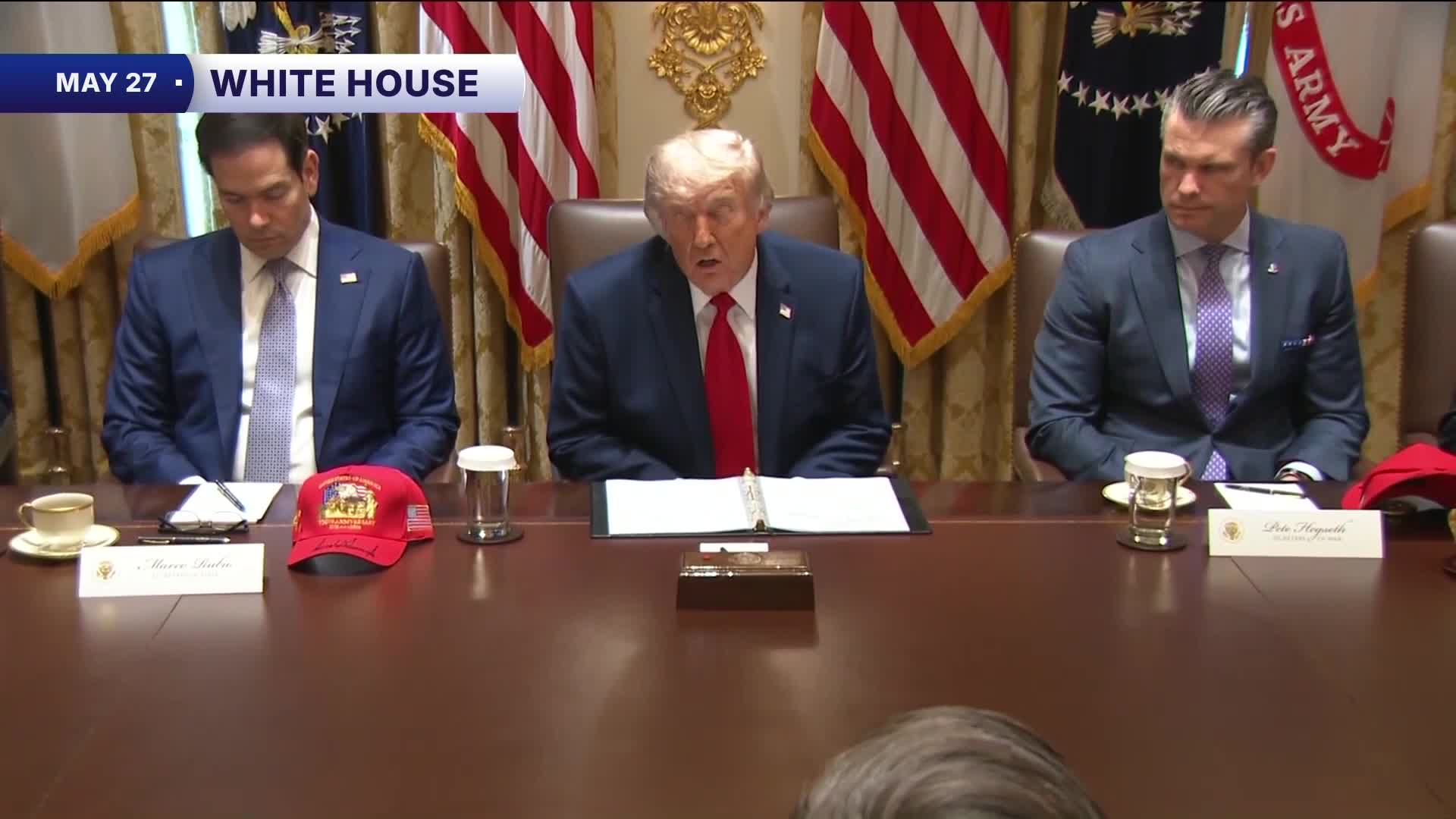
"[Iran] thought they were going to out-wait me," Trump said during a Wednesday cabinet meeting. "You know, 'we'll out-wait him, he's got the midterms.' I don't care about the midterms."
"Very simple, Iran cannot have a nuclear weapon," he added.
RELATED STORY | Trump cabinet meets as fragile Iran peace talks reach critical stage
Scripps News Political Director Andrew Rafferty pointed out that this may have been another one of the president's off-the-cuff moments, given how involved he has been in several midterm primary races already. Trump has endorsed primary challengers against sitting Republicans who broke with his agenda — and those challengers have won. Sen. Bill Cassidy, Rep. Thomas Massie, a group of Indiana state Senate Republicans, and U.S. Sen. John Cornyn have all fallen to Trump-backed opponents.
Meanwhile, the message to Republicans in Washington has been direct: defy the Trump agenda and face a primary challenge. Trump's primary dominance has also reshaped the Republican field heading into November. Candidates who survive their primaries will do so largely because of Trump's support — or because they avoided his opposition. That could leave the general election field populated with candidates whose appeal is strongest among the Republican base but who may face challenges winning over moderate and independent voters.
The economy
Consumer confidence has been on the decline since the start of the Iran war, as millions of Americans face higher prices for everyday essentials like groceries and gas. Inflation jumped to 3.8% in April, the highest in three years and well above the Federal Reserve's 2% target.
A recent AP-NORC poll found that just 6 in 10 Republicans approve of how Trump is handling the economy — down from 8 in 10 in February, before the start of the Iran war. But when asked about the war's impact on Americans' finances, Trump brushed the issue off.
RELATED STORY | Affordability concerns are weighing harder on consumer sentiment as Iran war drags on
"The only thing that matters when I'm talking about Iran — they can't have a nuclear weapon. I don't think about Americans' financial situation; I don't think about anybody. I think about one thing: We cannot let Iran have a nuclear weapon," Trump said.
Those comments mark a major shift from Trump's messaging during his State of the Union address in February, in which he insisted he was laser focused on the economy and addressing the affordability crisis. In the months since, Trump has taken some steps to try to address the burden of high costs, but concern among Americans persists.
Scripps News White House Correspondent Jacob Gardenswartz noted that the Iran war appears to be the dominant issue within the Trump administration.
"It's certainly the case that folks in and outside of the White House would like the president to be focusing on those issues: affordability, inflation, the economy — more broadly, the things that Americans say are most important to them. The president has trouble doing so for a couple of reasons," Gardenswartz said. "First of all, this war with Iran is probably the dominant story out of the White House today. And so every time there is a public event, he's going to be asked about it and that's going to be the case until this conflict has ended — and likely beyond that."
