

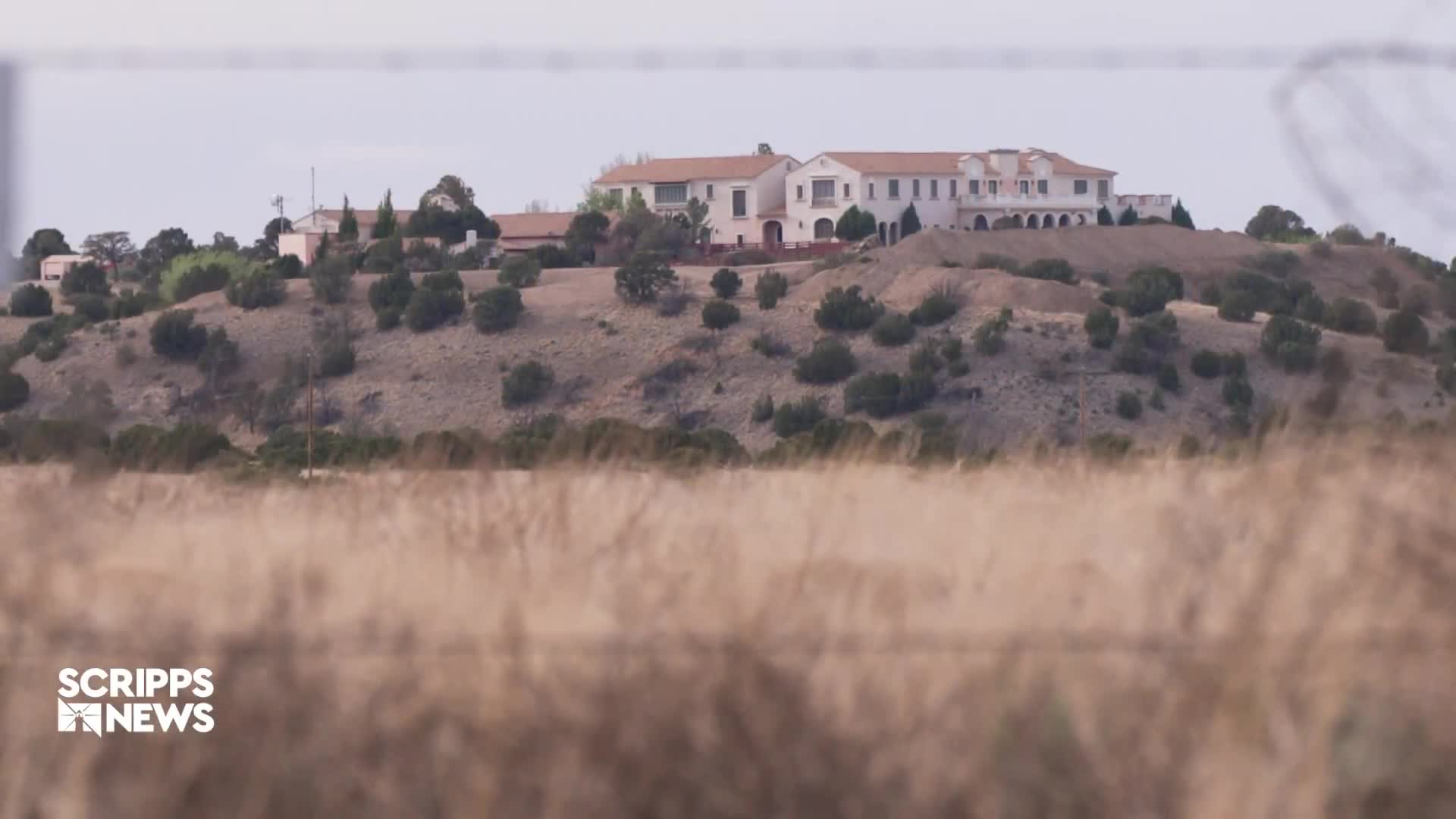


On desolate dry land, about 40 miles south of Santa Fe, New Mexico, sits a sprawling estate — mostly ignored by people passing by on the nearby highway.
The property, in the town of Stanley, is notorious for its former owner, the late convicted sex offender Jeffrey Epstein, who bought the property in 1993.
Now, the estate, known as Zorro Ranch, is back in the spotlight as state lawmakers probe Epstein’s alleged crimes at the home, what investigators may have missed and what federal authorities may have withheld.
The word “Zorro” appears nearly 14,000 times in files connected to Epstein released by the Department of Justice, but the land has never been searched by federal authorities, and unredacted files have not been turned over to the New Mexico Department of Justice for its ongoing investigation.
Federal investigators told New Mexico attorney general to stand down
Former New Mexico Attorney General Hector Balderas first started looking into Epstein and the Zorro Ranch in 2019.
Allegations of crimes committed at the property include rape, sexual assault of minors, forced births and eugenics, according to accounts from Epstein survivors, their diary entries, and from the millions of files released by the Department of Justice.
IN CASE YOU MISSED IT | Bondi says Blanche led Epstein review, cites privilege on Trump discussions
Months before Epstein was arrested in 2019, Balderas says he was well into building a state case and had just returned from interviewing an Epstein survivor when he received a call from the Southern District of New York.
"They were concerned that we were getting parallel interviews from the same survivors they were going to use in an aggressive prosecution as well,” Balderas told the Scripps News Group in April.
Balderas paused the state probe, saying federal officials had “the bigger hammer at the time.” In exchange, he says he was promised by then-Assistant U.S. Attorney Maureen Comey that the DOJ would share evidence about the case and allow Balderas to pursue state charges down the road.
That never happened and federal investigators never executed a search warrant on the property.
IN CASE YOU MISSED IT | Former Epstein assistant alleges sexual assault by ex-Miami Beach mayor, celebrity hairstylist
“I think that they absolutely impacted our case, and I don't think that they were forthright, and I don't they were operating in good faith," Balderas said.
Now, Balderas wishes he had continued to pursue the state case.
"We would have absolutely gone alone and bet on the case that we currently had at the time," Balderas said.
A buried tip
Around the same time Balderas was working the case, local radio host Eddy Aragon received an emailed tip from someone who claimed to have worked on the ranch, alleging the bodies of two foreign girls were buried “in the hills outside the Zorro.”
Aragon says he sent that tip to the FBI, and there was no follow-up.
A Scripps News search of the DOJ files shows the FBI didn't enter Aragon's report into the system until 2021 — two years after he submitted it.
"I don't think anybody investigated it,” Aragon said. “Would you think if we entered it three years later, like nothing was done?"
That tip never made it from the FBI’s desk in New York to Balderas’ office in New Mexico.
Balderas says he only learned about that email this year after Congress voted to release the so-called Epstein files.
“I’m very angry,” Balderas said. "They didn't meet the standard of what a good prosecution team should be working and collaborating with other partners.”
Epstein leased land from the state
The “hills outside the Zorro” mentioned in the allegation sent to Aragon could potentially refer to state land that Epstein leased from New Mexico, extending far beyond his estate’s property line.
That state-leased land would have fallen under Balderas’ jurisdiction to investigate.
Stephanie Garcia Richard oversees that land as New Mexico’s Commissioner of Public Lands. Her office initially discovered Aragon’s email in the released files.
"As soon as I saw that, my heart dropped," Garcia Richard said. “What if the allegations were true?”
When asked whether she had real concern that bodies could be buried on or near the Zorro Ranch property, Garcia Richard said the possibility exists.
"We do know there are missing individuals,” she said. “Those girls ... their bodies have not been recovered. So, you know, there is a potential there.”
RELATED STORY | New Mexico's Epstein 'Truth Commission' issues 14 subpoenas at inaugural meeting
The ranch was between 7,500 and 10,000 acres, but Epstein added a 1,200-acre buffer zone through a lease of land from the state. That additional land makes the search for those alleged buried bodies even more challenging. The 2023 sale of the property to former Texas state senator Don Huffines could make a future investigation even more challenging.
“There has been a long span between 2019 and today. We don't know the state of the, you know, the evidence now,” Garcia Richard said.
State lawmakers seek answers
Now, a group of New Mexico state lawmakers are seeking more answers on alleged crimes at the Zorro Ranch and what authorities may have missed.
Republican State Representative Andrea Reeb is among four lawmakers on the bipartisan Epstein “Truth Commission” formed earlier this year. She feels Balderas should have taken more action when he was probing the case.
“You hear, ‘Oh, well, we didn't have the charges or the statutes to charge what the feds could have charged,’ but we had criminal sexual penetration of a minor for all different ages; one of them carries 18 years in prison. We had, may not have had trafficking of humans or sex trafficking charges, but we had enough that we could have definitely gotten some serious jail time on Mr. Epstein.”
Reeb says she would have indicted the case had she been told by federal officials to pause it.
She doesn’t accuse Balderas of wrongdoing, but said it was a missed opportunity.
Balderas counters that belief.
“We were still building a case,” he said. “We were as transparent as we needed to be at that time.”
For its part, the “Truth Commission” announced Monday it will issue 14 subpoenas in connection with its probe. The subpoenas are not directed at specific individuals but target the Epstein Estate, as well as banks and other entities tied to Epstein or related investigations.
Whether the Commission, the New Mexico DOJ or the federal government will get true justice for survivors is still very much an open question. But for many, justice starts with getting more answers.
“I'm convinced that those answers are not in the documents that have been released,” Balderas said. “But they're in the millions of documents that are currently being withheld.”
