

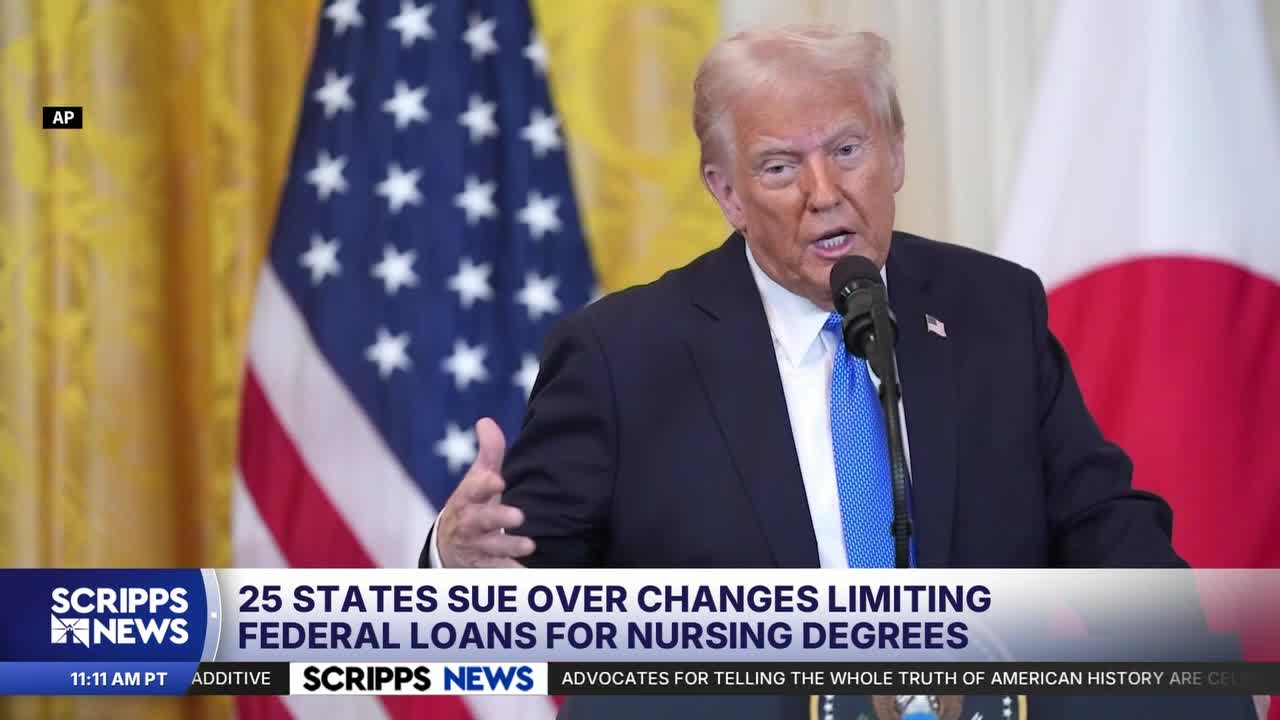


Changes by the Trump administration involving student loans could contribute to a shortage of doctors and nurses in the coming years, Todd Pickard, president and chair of the Board of Directors for the American Academy of Physician Associates, warned.
The Department of Education is updating its definition of professional degrees. Under the new rule, students studying to become physician associates (PAs) would no longer be eligible for higher levels of federal student loans. PA programs require a master’s degree, thousands of hours of clinical training and a license in every state.
Physical therapy, occupational therapy, advanced nursing and several other medical fields have also been reclassified from professional degrees to general graduate degrees.
Under the change, students in these programs would be limited to $20,500 annually and $100,000 total in federal loans, compared with up to $50,000 a year and higher lifetime limits previously.
Pickard said the move could make these degrees inaccessible for many prospective students.
“I’m most concerned about decreasing the pipeline of health care providers in the United States,” he said. “At a time when we should be investing in health care, divesting is not the right answer. Patients should expect that if there are fewer providers, it will take them longer to be seen, and their health conditions may worsen.”
RELATED STORY | Big student loan changes hit July 1, but most borrowers say they're not ready
Pickard said rural health care networks would be especially hard hit, noting they already face shortages.
“We have workforce shortages of physicians. There are not enough nurses or PAs. There’s just more demand,” he said. “There are more patients than there are health care providers. In the next five to six years, half of all medical providers will be physicians and the other half will be PAs and nurse practitioners. We need to make sure all of our pipelines are not being impacted negatively.”
In response, 25 state attorneys general or governors have filed lawsuits against the federal government over the new rule, which is set to take effect July 1.
The American Academy of Physician Associates is also seeking an injunction to stop the rule.
Pickard said the Department of Education’s goal appears to be lowering tuition costs for medical education by reducing loan limits.
“PA school and most medical education is not just about tuition. It is about housing, transportation, food, books and supplies,” he said. “At this time, I have not heard of a single PA program or other medical education program lowering tuition costs. This is a fair conversation to have, but I think this is the wrong tool for the job.”
RELATED STORY | Federal student loan repayment rules are changing in 2026: What borrowers need to know
The Department of Education said 95% of nursing graduates borrow below the new caps and would not be affected. The administration also argues that allowing students to borrow for the full cost of attendance has contributed to rising costs.
