

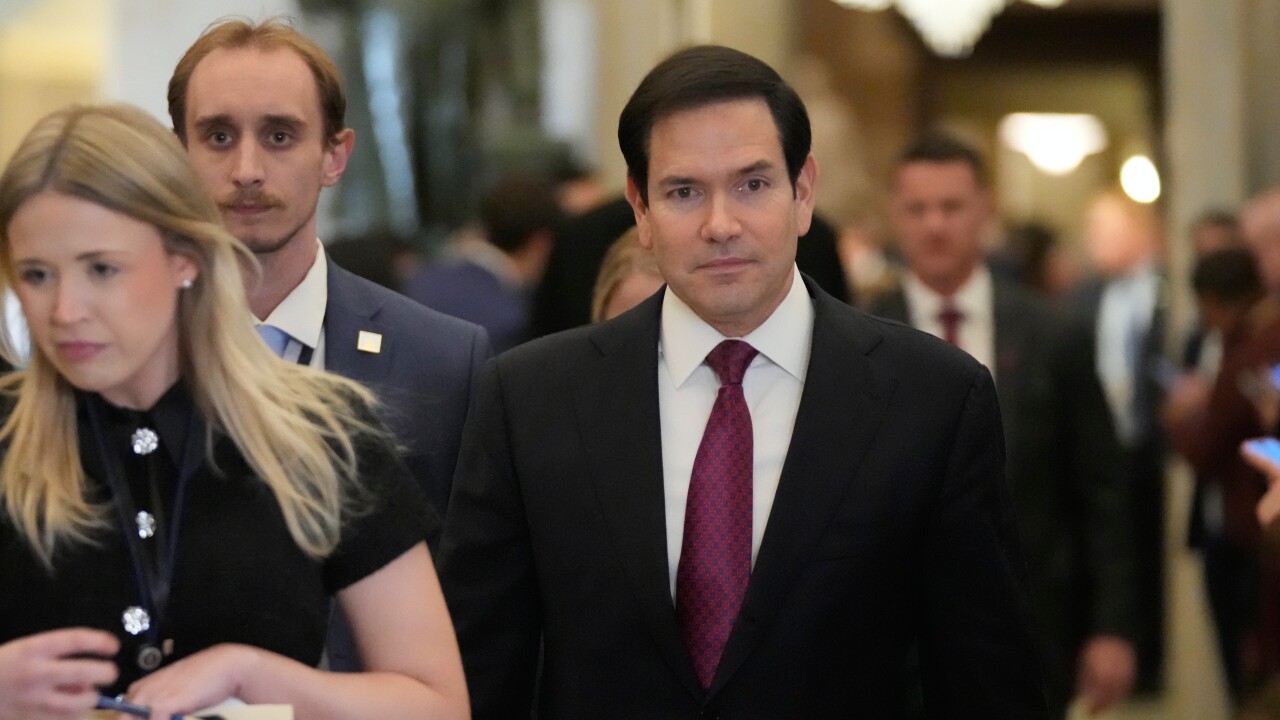


Secretary of State Marco Rubio flies into the Caribbean country of St. Kitts and Nevis on Wednesday for talks with regional leaders who, like others around the world, are unsettled and uncertain about Trump administration policies.
After President Donald Trump ordered a military operation last month to remove and arrest Venezuela's then-leader, Nicolás Maduro, stepped up aggressive tactics to combat alleged drug smuggling and turned up pressure on Cuba, Rubio will attend a summit of the Caribbean Community, or CARICOM.
During his State of the Union address Tuesday night, Trump called Maduro’s capture “an absolutely colossal victory for the security of the United States. And it also opens up a bright new beginning for the people of Venezuela.”
Leaders from the 15-nation bloc are gathering to debate pressing issues in a region that Trump has targeted for a 21st century incarnation of the Monroe Doctrine meant to ensure U.S. dominance in the Western Hemisphere.
RELATED STORY | Jamaica begins sorting through damage after Hurricane Melissa's direct hit
Trump said his administration is “restoring American security and dominance in the Western Hemisphere, acting to secure our national interests and defend our country from violence, drugs, terrorism and foreign interference.”
CARICOM leaders have complained about administration measures that include demands for nations to accept third-country deportees from the U.S., reject Cuban medical missions and chill relations with China.
Godwin Friday, newly elected prime minister of St. Vincent and the Grenadines, echoed the fears of many European leaders when he said the Caribbean is "challenged from inside and out. International rules and practices that we have become used to over the years have changed in troubling ways.”
Caribbean leaders point to shifting global order
During Tuesday’s opening ceremony, Terrance Drew, prime minister of St. Kitts and Nevis and CARICOM chair, said the region “stands at a decisive hour.”
“The global order is shifting,” he said. “Supply chains remain uncertain, energy markets fluctuate and climate shocks intensify.”
Like other leaders, Drew spoke about changing geopolitics and said the humanitarian situation in Cuba must be addressed and taken seriously, something also stressed by Jamaican Prime Minister Andrew Holness.
“It must be clear that a prolonged crisis in Cuba will not remain confined to Cuba,” Holness warned. “It will affect migration, security and economic stability across the Caribbean basin.”
Holness said Jamaica “stands firmly for democracy” and that his country also "supports constructive dialogue between Cuba and the U.S. aimed at de-escalation, reform and stability.”
Bahamian Foreign Minister Fred Mitchell told The Associated Press on Tuesday ahead of the summit that he doesn’t know if individual topics will come up in talks with Rubio but said he expects a full discussion on the nature of the relationship with the U.S.
RELATED STORY | Cuba demands US release Maduro, condemns killing of 32 officers
“It is about mutual respect and a rules-based order,” he said. “Those are some of the things we would expect from the meeting, and we are also available for any private dialogue with Mr. Rubio.”
The State Department has not said which officials Rubio will meet with Wednesday but that he intends to discuss ways to promote regional security and stability, trade and economic growth in group and bilateral meetings.
Caribbean leaders also are expected to talk about other issues like security, reparations, climate change and financing, and a single market economy.
US policy in the Caribbean
Rubio’s visit comes more than a month after the U.S. captured Maduro and brought him to the U.S. to face drug trafficking charges.
The U.S. also has killed at least 151 people in strikes targeting small boats accused of smuggling drugs since early September. The latest attack Monday killed three people in the Caribbean Sea. The U.S. has not provided evidence that the targeted boats are ferrying drugs.
Kamla Persad-Bissessar, Trinidad and Tobago's prime minister, has previously praised the attacks. Tuesday was no exception as she thanked Trump, Rubio and the U.S. military “for standing firm against narcotrafficking" and for their cooperation in national security matters.
“The crime is so bad, I cannot depend on just my military, my protective services,” she said.
Cuba's situation also is expected to dominate talks at CARICOM's summit.
Cuba’s U.N. resident coordinator Francisco Pichón told AP on Monday that the U.S. oil embargo is preventing humanitarian aid from reaching those still struggling to recover from Hurricane Melissa, which struck eastern Cuba in late October as a Category 3 storm.
He noted that the energy blockade and fuel shortages “affect the entire logistics chain involved in being able to work in Cuba at this time, anywhere in the country.”
